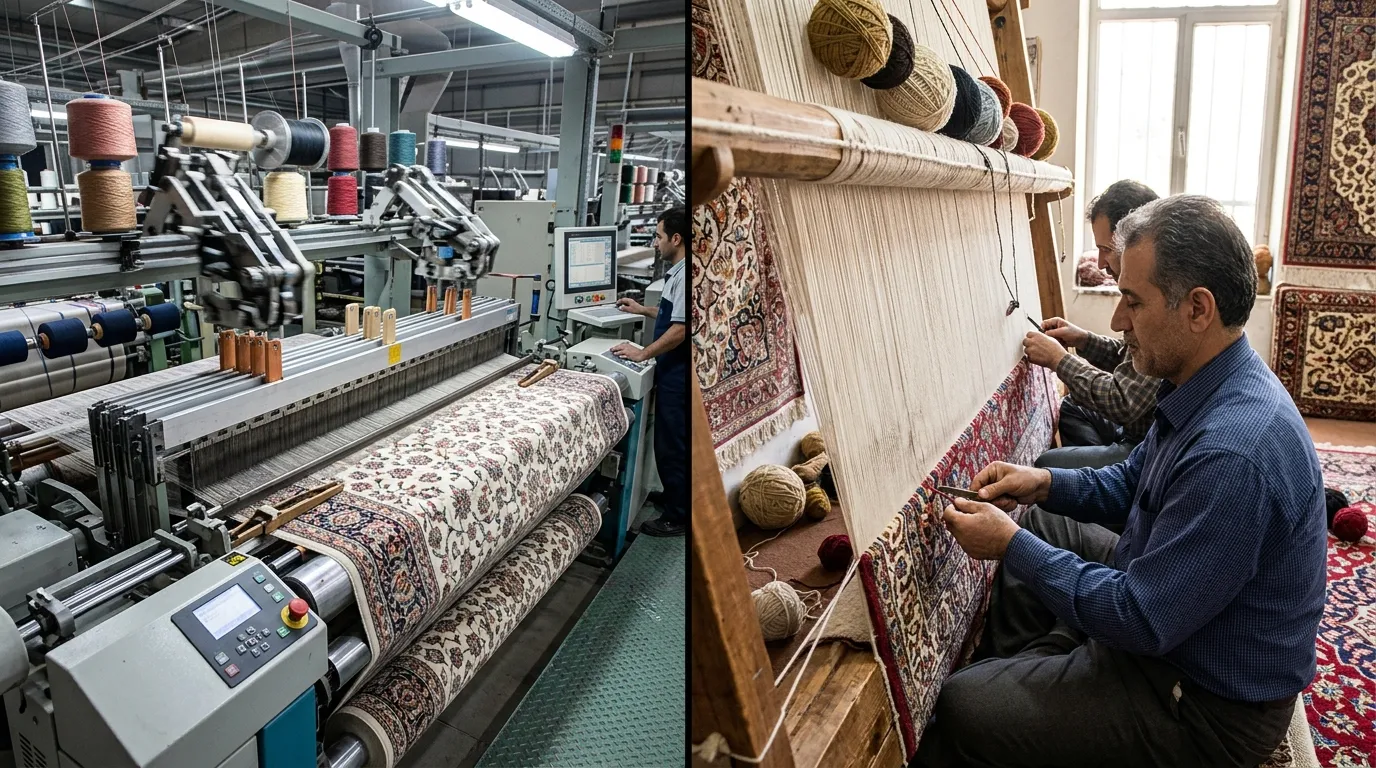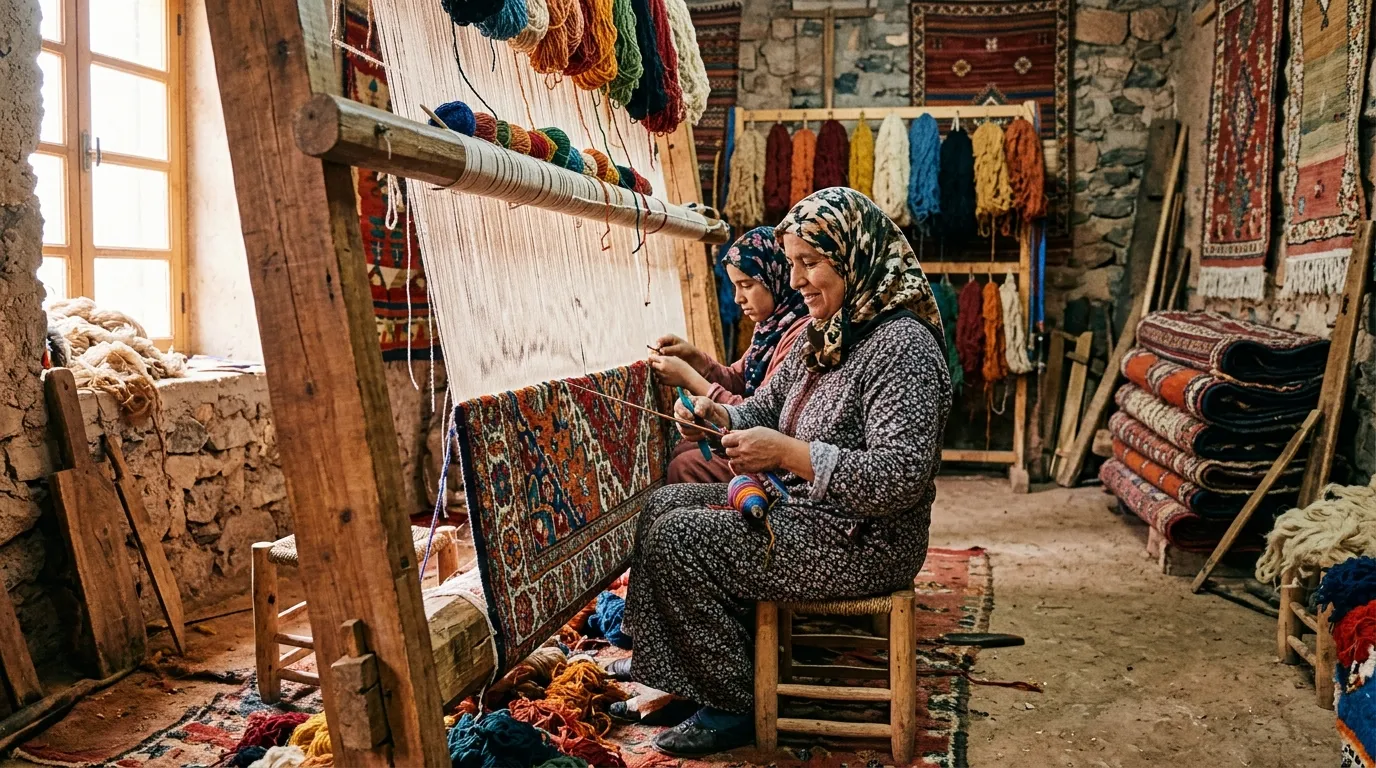

Carpets that are handmade are produced using an extensive process in which the weaver ties knots by hand to create a full carpet, and the outcome will depend a great deal on the materials used and the skill involved in creating the carpet.
While all people will see is the finished product on display in a store, what they have before them is actually a weeks or months worth of hard work. The way that each color changes, the way the pattern moves, and the various textures come about as each individual thread is tied into place, and this is why handmade carpets seem so detailed.
What Are Handmade Carpets?
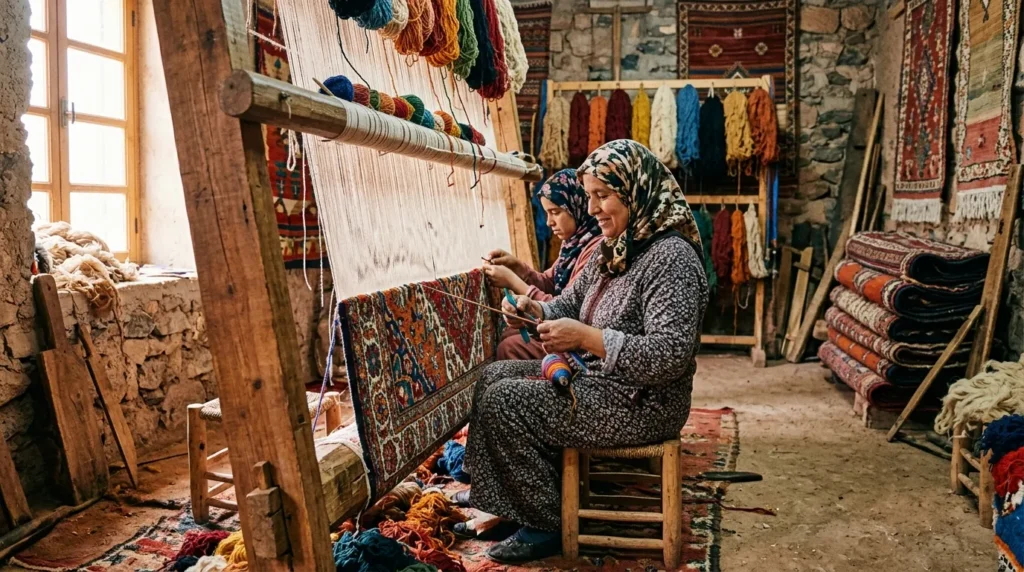
Hand made carpets are carpets which are manufactured through the manual process of weaving the yarn on a loom, in contrast to those which have been machine-made.
This means that the carpets are produced in rows, where the artisans weave their carpets according to an existing design by tying knots along the vertical threads running on the loom. It is the number of knots per inch or per square meter that determines the quality and durability of the carpet.
It is due to this very reason that there can never be two carpets which are exactly alike, despite being based on the same design.
Step-by-Step Process of Making Handmade Carpets
The production of a handmade carpet follows a structured sequence, where each stage directly affects the final texture, strength, and appearance of the carpet.
Step 1: Designing the Pattern
It begins with the creation of a detailed plan of the carpet’s design that is known as a “cartoon.”
The cartoon can be designed using graph paper or computer software, according to the method of manufacture of the carpet. The squares on the cartoon represent either one knot or multiple knots to guide weavers in their work.
In addition, colors are decided at this point of time in accordance with the yarn used for manufacturing the carpet.
Step 2: Preparing the Yarn
After completing the design process, the next step is to choose the yarn and prepare it for weaving.
The woolen fiber is the most common, but one may choose silk, cotton, or a blend of these materials depending on the type of carpet. Yarn selection involves spinning, cleaning, and dyeing, depending on the design specifications.
Yarn may be dyed either through natural or synthetic means, but consistency in colors is paramount since inconsistencies may result in misalignment during the design process.
The last part involves drying and organizing the yarn bundles.
Step 3: Setting Up the Loom
The loom is the structural frame that holds the carpet during weaving.
Vertical threads called warp threads are tightly stretched across the loom to create the foundation. These threads determine the width and structure of the carpet.
Horizontal alignment is also checked carefully to ensure the surface stays even during weaving. Proper tension is important at this stage because it directly affects the uniformity of the final carpet.
Step 4: Knotting the Carpet
This is undoubtedly the most critical and laborious step in the whole process.
The artisans make individual knots over two adjacent warp threads based on the design template. The individual knot symbolizes the part of the total image that needs to be created, and there could be several thousand or even million knots depending on the dimensions and complexity of the carpet being designed.
Once the row of knots is made, the thread is cut, and then the next row can start. In this way, row by row, the entire image is being created.
Here comes into play the number of knots per unit area as the greater number allows making more intricate designs.
Step 5: Beating and Tightening
When a new row of knots has been tied, the carpet is beaten to tighten it, using an implement resembling a comb, known as the beater.
The process squeezes the knots together and maintains uniformity in the carpet’s composition. This makes the knots stable and helps make the carpet resilient.
If the carpet is not beaten, it will appear loose and may easily become misshapen.
Step 6: Cutting and Trimming
After the process of weaving is done, the carpet will be taken out of the loom, and its surface will be trimmed.
The trimming process ensures that all the fibers will be even. It involves trimming the pile into equal lengths.
This step is crucial since it determines the texture of the carpet.
Step 7: Washing and Finishing
Once the carpet has been cut to the desired size, it is washed to ensure that all the dust particles, excess dyes, and other impurities are removed from the carpet.
Washing also softens the carpet and makes its natural colors appear clearly. In most instances, the carpet is dried using the sun’s rays.
Other finishing processes include brushing, reinforcing the edges, and inspecting the quality.
How Long Does It Take to Make a Handmade Carpet?
Time needed is mostly dictated by carpet size, knot density, and complexity of the design.
Simple carpets that use smaller sizes and have uncomplicated designs could be finished within a number of weeks, but complex carpets would take months or even more than one year to finish.
Carpets that utilize high knot density would take considerably longer since knots will have to be knotted by hand individually. The more complicated the design is, the longer the entire process takes.
It should be noted that handmade carpets usually require considerable amounts of time for production.
Conclusion
Handcrafted carpets are made using a meticulous process that includes designing, spinning of yarns, loom setting, knotting, weaving, clipping, and finishing.
Every one of these steps adds value to the end result in terms of strength, texture, and design, and this is why handcrafted carpets are often seen as more luxurious and special than machine-made carpets.
Finally, it is not only the materials used but the effort involved in making each knot that adds value to handcrafted carpets.