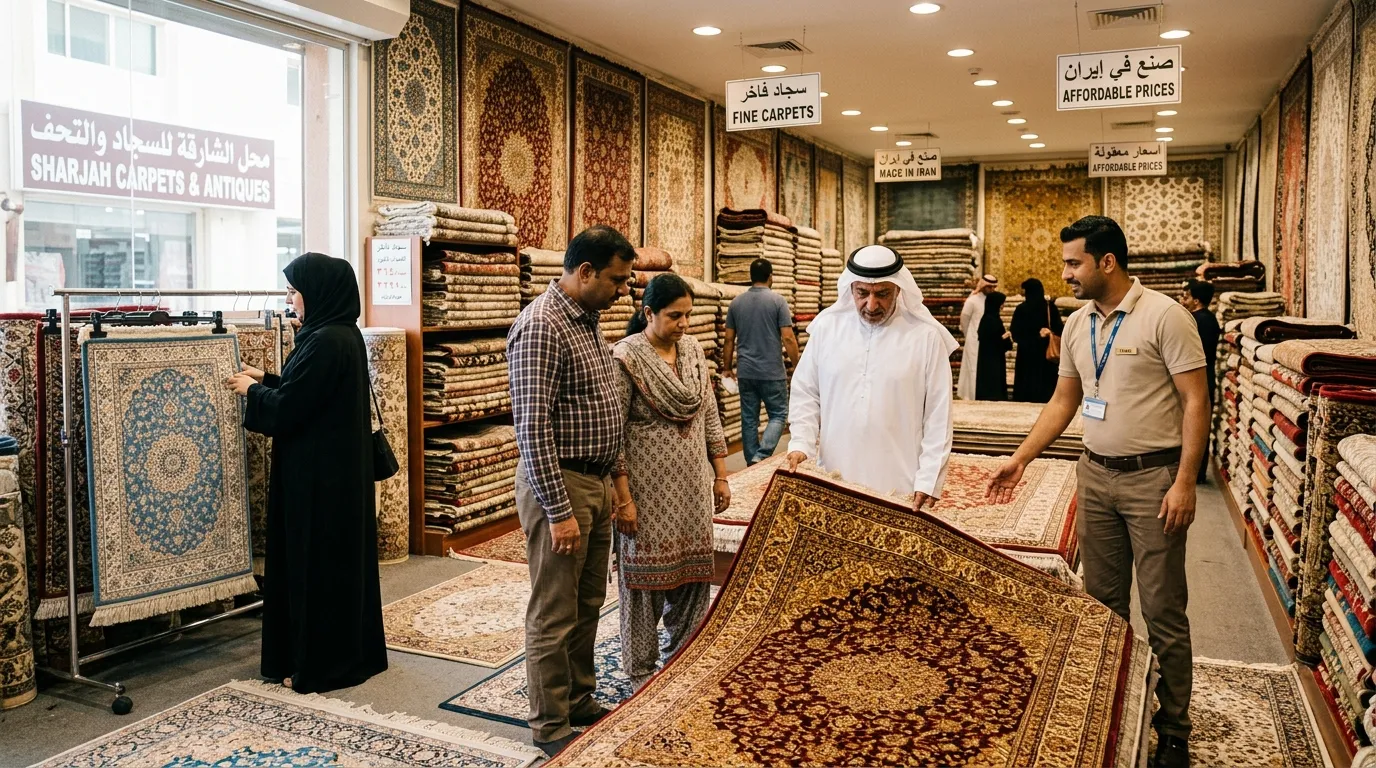
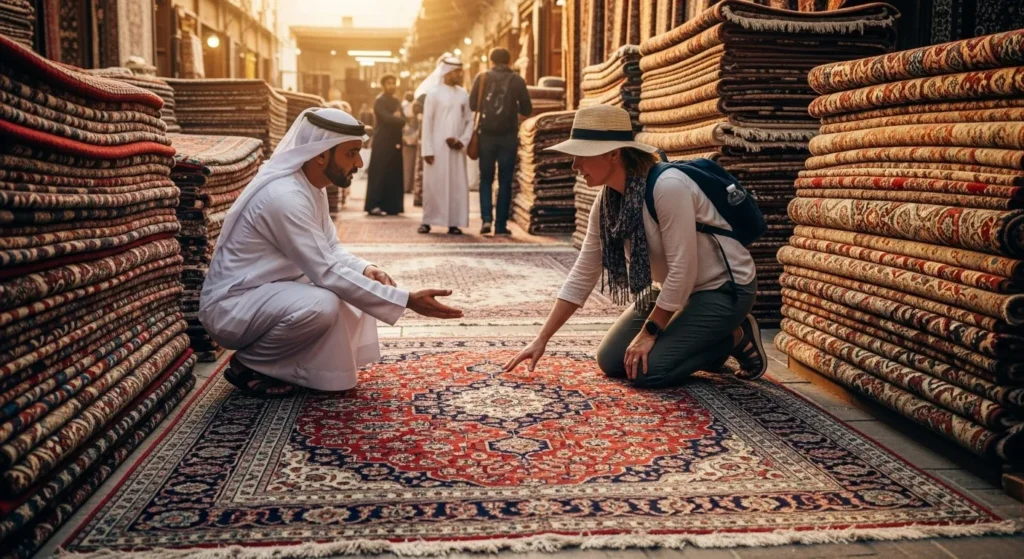
Identifying original Persian carpets in Sharjah is essential because many carpets sold under the “Persian” label are either machine-made, produced outside Iran, or made using synthetic materials while being priced as authentic.
A genuine Persian carpet is defined by origin, construction method, materials, and regional design tradition. Without understanding these factors, buyers risk paying premium prices for carpets that lack durability, cultural value, and long-term worth.
This guide explains how to technically verify authenticity before purchasing a Persian carpet in Sharjah.
What Makes a Carpet Truly Persian?
A carpet is considered Persian only if it is hand-knotted in Iran. Design alone does not define authenticity. Carpets made in India, Pakistan, Turkey, or China using Persian motifs are not Persian, regardless of visual similarity.
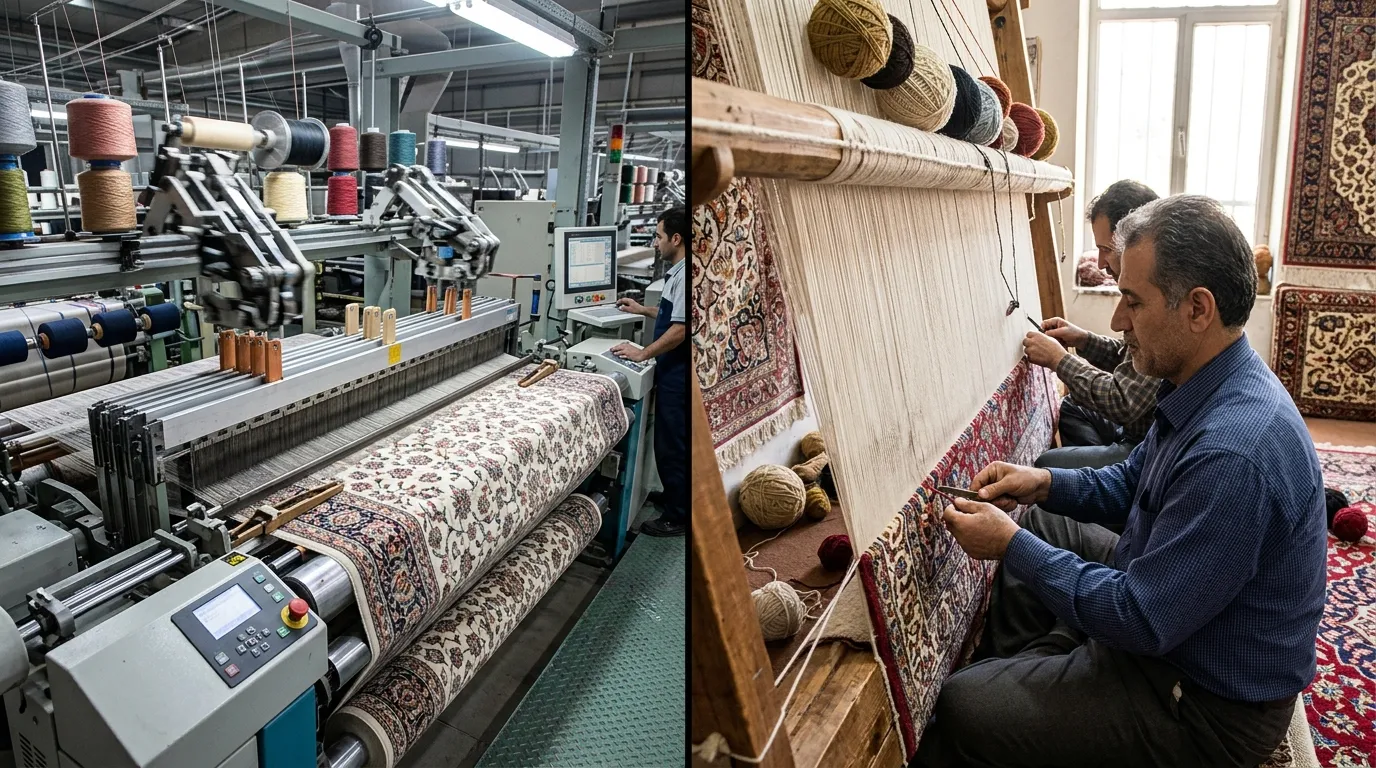
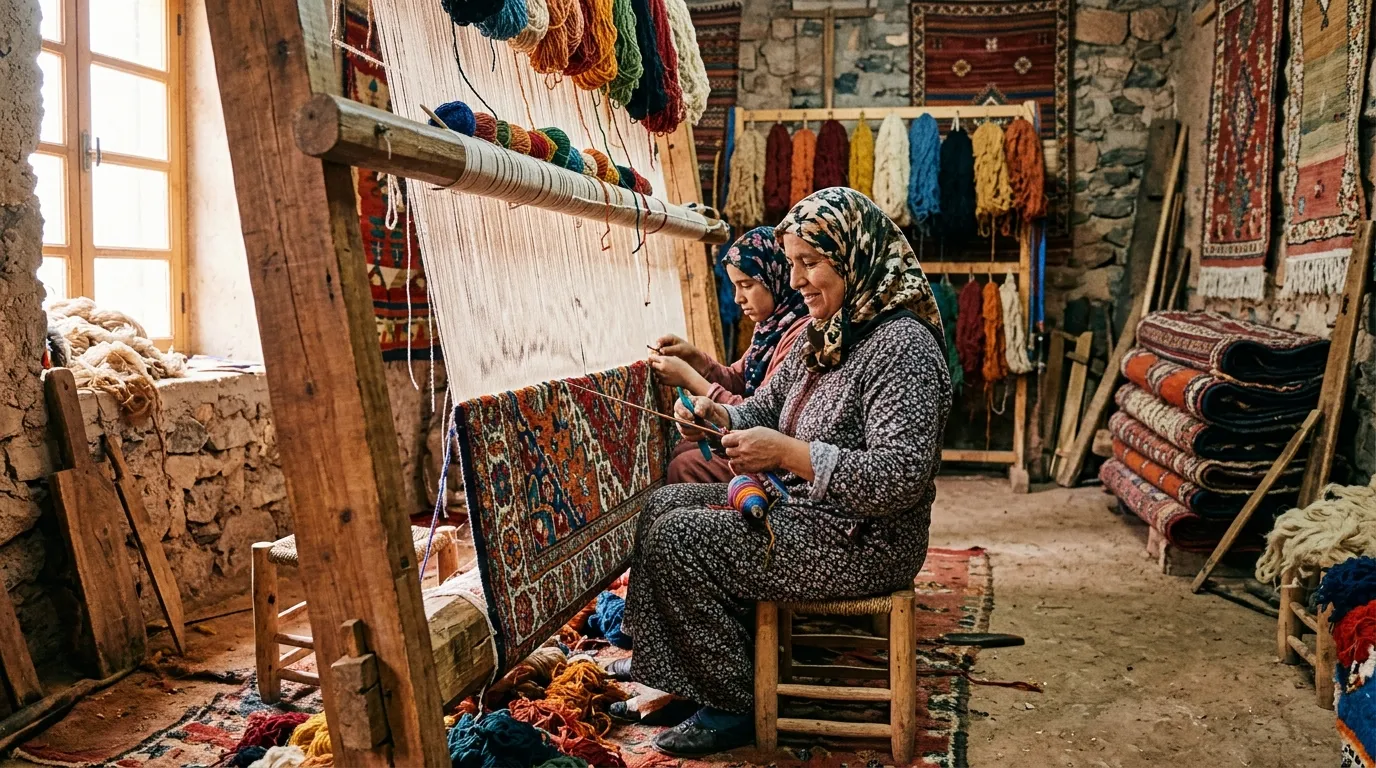
Authentic Persian carpets are produced on vertical or horizontal looms using manual knotting techniques passed down through generations. Each knot is tied by hand around warp threads, which requires time, skill, and precision. Production timelines range from several months to multiple years depending on size, knot density, and materials.
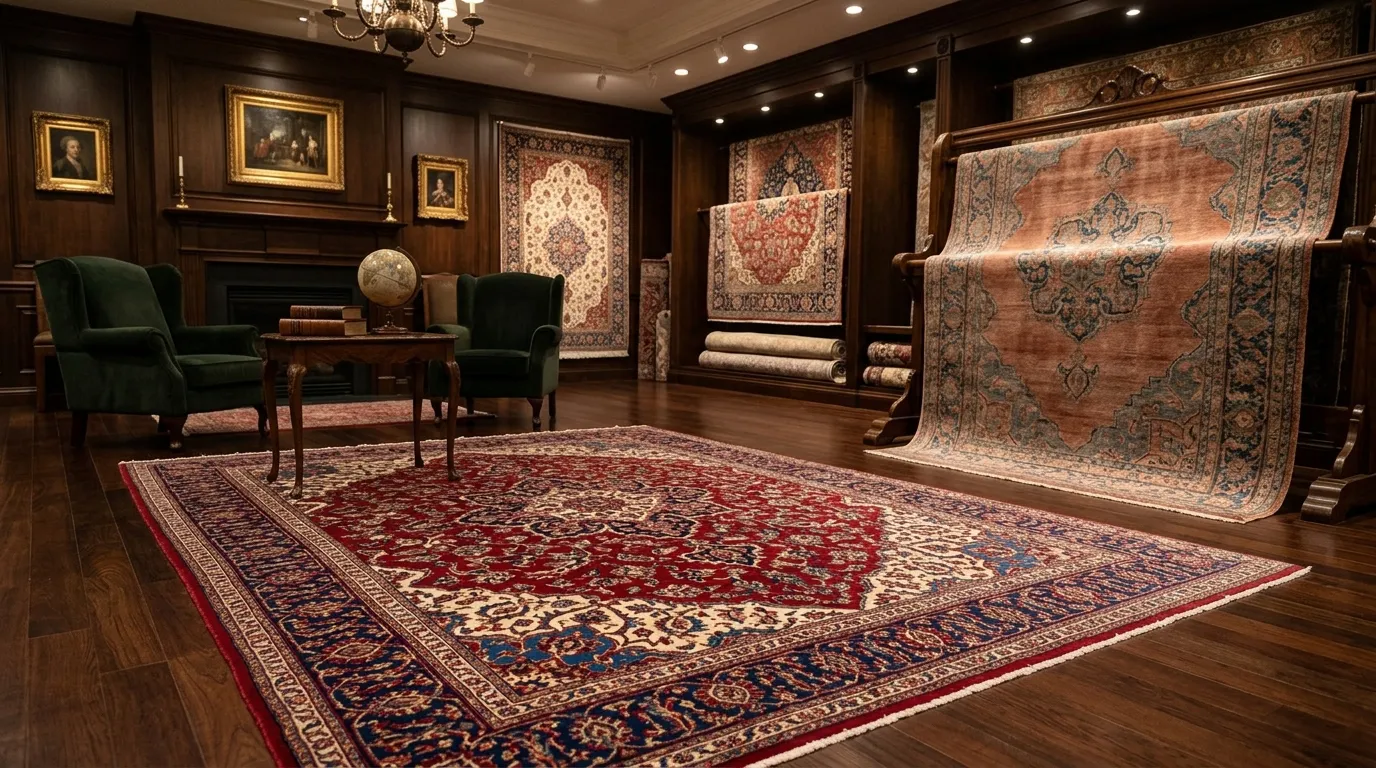
Different Iranian regions produce carpets with identifiable characteristics. Tabriz carpets often feature fine knot density and detailed medallions. Kashan carpets are known for symmetrical designs and rich reds. Isfahan carpets display high precision with silk highlights.
Qom carpets are frequently silk-based with dense curvilinear patterns. These regional traits help confirm origin when combined with structural analysis.
Key Weaving Signs To Check Before Buying
The knot structure is the most reliable indicator of authenticity. Persian carpets primarily use the asymmetrical Persian knot, also known as the Senneh knot. This knot allows for finer detail and higher knot density than many symmetrical alternatives.
When inspecting the carpet closely, knots should be visible individually rather than appearing as a uniform grid. Minor irregularities in alignment are normal and expected in handwoven carpets. Perfect uniformity usually indicates machine production.
Knot density matters, but it should be evaluated alongside material quality. Higher knots per square inch generally allow for sharper patterns, but excessive density with synthetic fibers does not equal authenticity.
Fringes must be part of the carpet’s structure. In genuine Persian carpets, fringes are extensions of the warp threads and emerge naturally from the weave. Sewn-on or glued fringes indicate non-authentic construction.
Side edges should be hand-finished and tightly wrapped. Machine binding or loose stitching suggests factory production.
Materials That Reveal Authenticity
Original Persian carpets use natural fibers. Wool is the most common pile material and is valued for resilience, elasticity, and dye absorption. Authentic Persian wool feels soft but firm and springs back when pressed.
Silk is used in higher-end carpets, either entirely or for design detailing. Genuine silk has a natural luster that shifts with light and feels cool to the touch. Artificial silk, often viscose, has excessive shine, lower tensile strength, and degrades faster, especially in Sharjah’s climate.
Cotton is commonly used for the warp and weft foundation. Synthetic foundations are uncommon in authentic Persian carpets and usually indicate mass production.
Natural dyes are another indicator. These dyes produce rich but slightly varied tones rather than flat uniform color. Synthetic dyes often appear overly bright or consistent and may bleed when exposed to moisture.
Pattern Details You Should Look Closely At
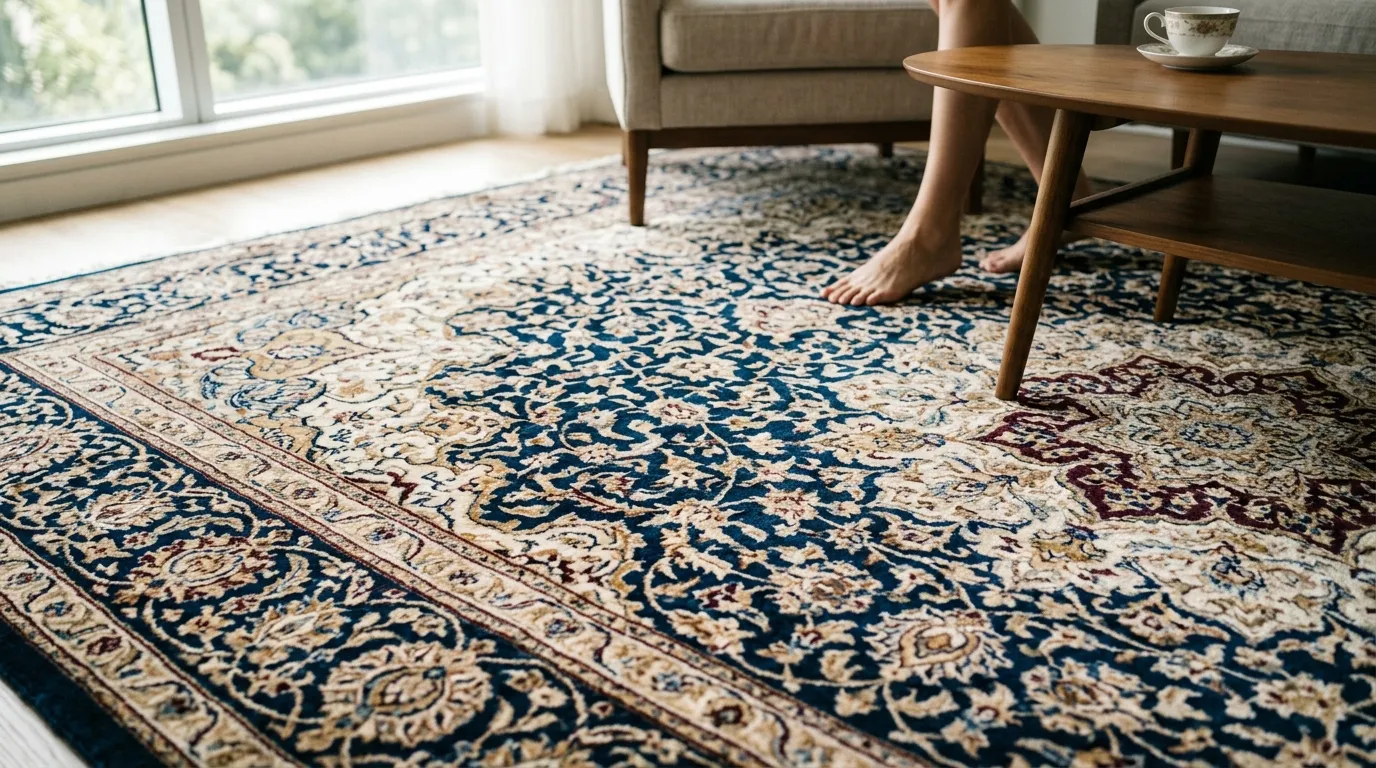
Designs in Persian carpets are formed by knot color changes, not printed or surface-dyed. Patterns should appear integrated into the structure rather than sitting on top of the pile.
Slight asymmetry is expected in handwoven carpets and indicates manual craftsmanship. Perfect repetition often signals machine manufacturing.
Abrash, or natural color variation, occurs when different batches of dyed wool are used during weaving. Abrash is common in authentic Persian carpets and should not be mistaken for defects.
Motifs should align with known regional styles. Random combinations of patterns from multiple regions often indicate imitation production intended to appeal broadly rather than reflect tradition.
How to Read the Back of a Persian Carpet?
The back of the carpet provides clear evidence of construction quality. In authentic Persian carpets, the design is visible on the reverse side, though colors appear muted. Individual knots should be clearly distinguishable.
The weave should be tight, consistent, and free from adhesive coatings. Latex, rubber backing, or cloth layers indicate machine-made or tufted carpets.
Warp threads should run straight without warping or distortion. Crooked foundations often result from rushed or mechanical production.
Common Fake Persian Carpets Found in Sharjah
Indo-Persian carpets are among the most common alternatives sold in Sharjah. These are hand-knotted but produced in India. While some are high quality, they should not be priced or marketed as Persian.
Pakistani carpets often use symmetrical knots and synthetic dyes. They are durable but lack the finesse and longevity of Iranian pieces.
Chinese carpets frequently imitate Persian designs using machine production or lower-grade wool. They may appear visually convincing but typically degrade faster.
Artificial silk carpets labeled as silk Persian carpets are widespread. These carpets are sensitive to humidity and foot traffic and are unsuitable for Sharjah’s environment.
Price Clues That Signal a Real Persian Carpet
Authentic Persian carpets require extensive labor, which is reflected in pricing. Very low prices are a strong indicator of non-Iranian origin or synthetic materials.
Silk Persian carpets are significantly more expensive due to material cost and weaving time. Wool carpets vary by knot density, region, and age but still maintain a baseline value.
Large discounts, unclear pricing explanations, or time-pressure sales tactics often indicate misrepresentation.
Negotiation is normal, but final prices should remain consistent with known market ranges for genuine Persian carpets.
Questions to Ask Carpet Sellers in Sharjah
Ask directly where the carpet was made and request confirmation that it was woven in Iran. A reputable seller will answer clearly.
Inquire about materials used in the pile and foundation. Ask whether dyes are natural or synthetic.
Request documentation, certificates, or provenance details where available. While not all carpets have formal certificates, experienced dealers can provide credible background information.
Ask about return policies and authenticity guarantees. Established sellers typically offer clear after-sales terms.
Final Thoughts
Authenticating Persian carpets in Sharjah requires evaluating origin, knot structure, materials, design integration, and seller transparency together rather than relying on appearance alone. Labels and verbal claims are insufficient without structural evidence.
A genuine carpet offers durability, artistic value, and long-term worth that imitations cannot match. By applying these technical checks, buyers can make informed decisions and avoid costly mistakes in a market where mislabeling is common.
Also Read: Is It Better to Buy Carpets Online or In-Store in Sharjah?