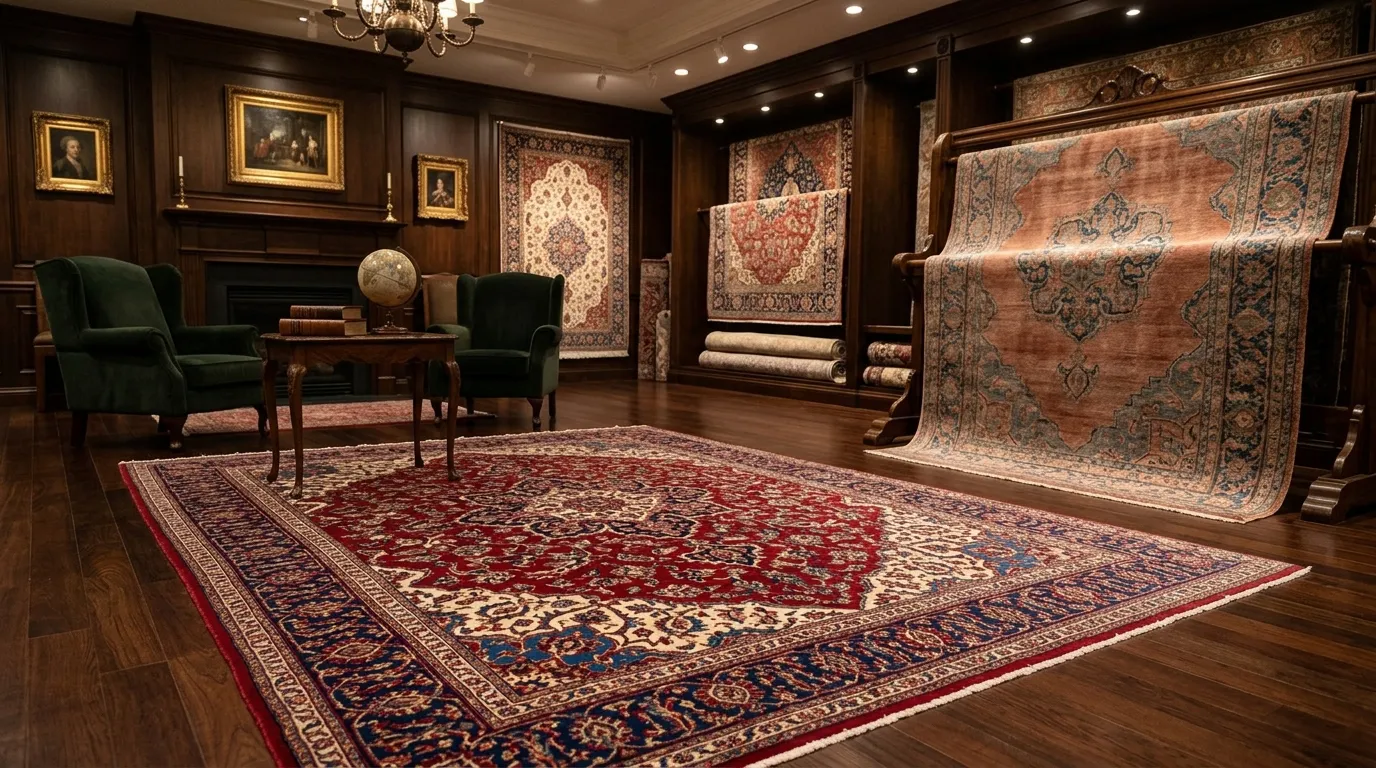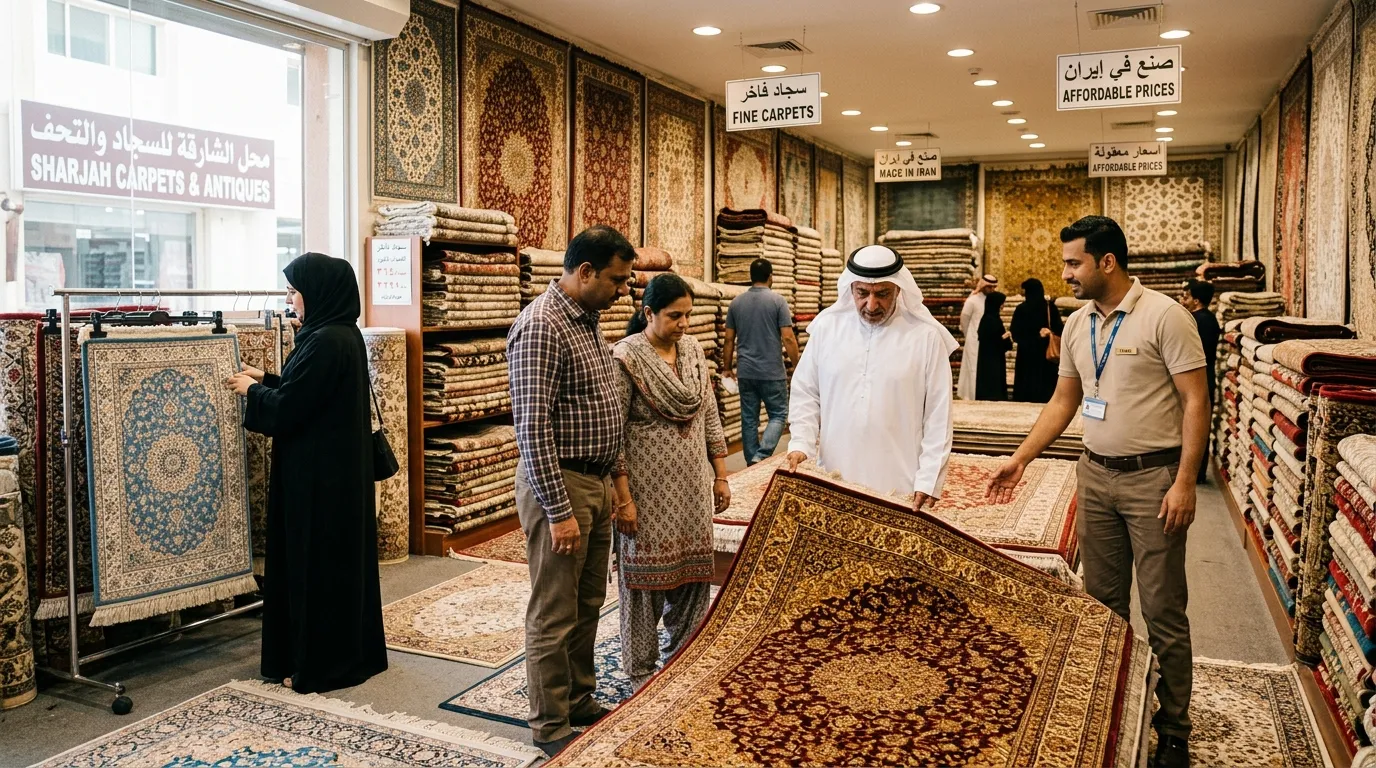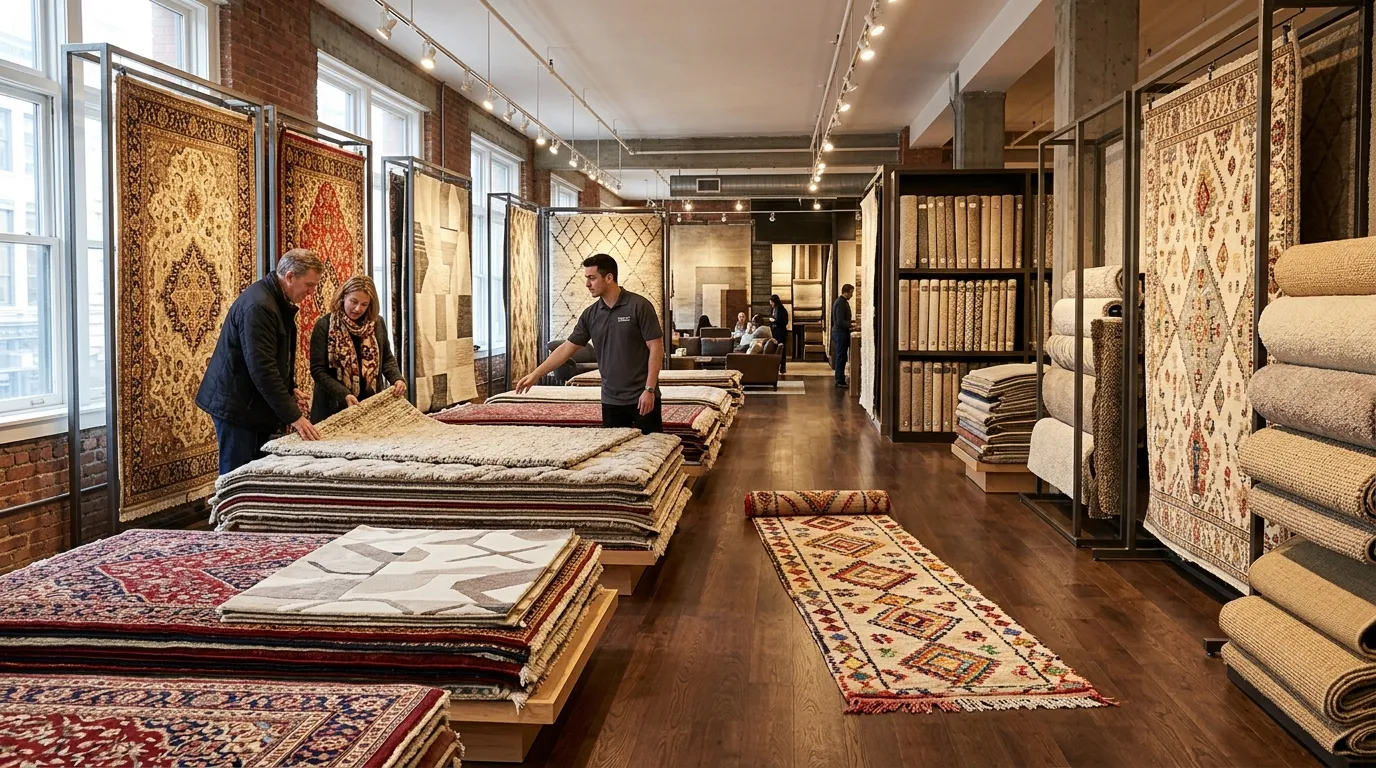

Seeing carpets in person before buying allows you to accurately assess color, texture, construction quality, scale, condition, and overall value. Online images cannot fully represent fiber depth, sheen variation, knot structure, or true proportions under natural and artificial lighting. Physical inspection reduces the risk of purchasing a carpet that looks different, feels different, or performs differently than expected.
Carpets are tactile, structural products made from natural or synthetic fibers that respond differently to light, pressure, and environmental conditions. Viewing them in person gives you measurable advantages in quality evaluation and purchase confidence.
You Can Check the Real Colors
Color accuracy cannot be guaranteed through digital screens.
Screen calibration, lighting conditions, camera exposure, and editing filters can significantly alter how a carpet appears online. Natural dyes may show tonal variation known as abrash, which is often not visible in photographs.
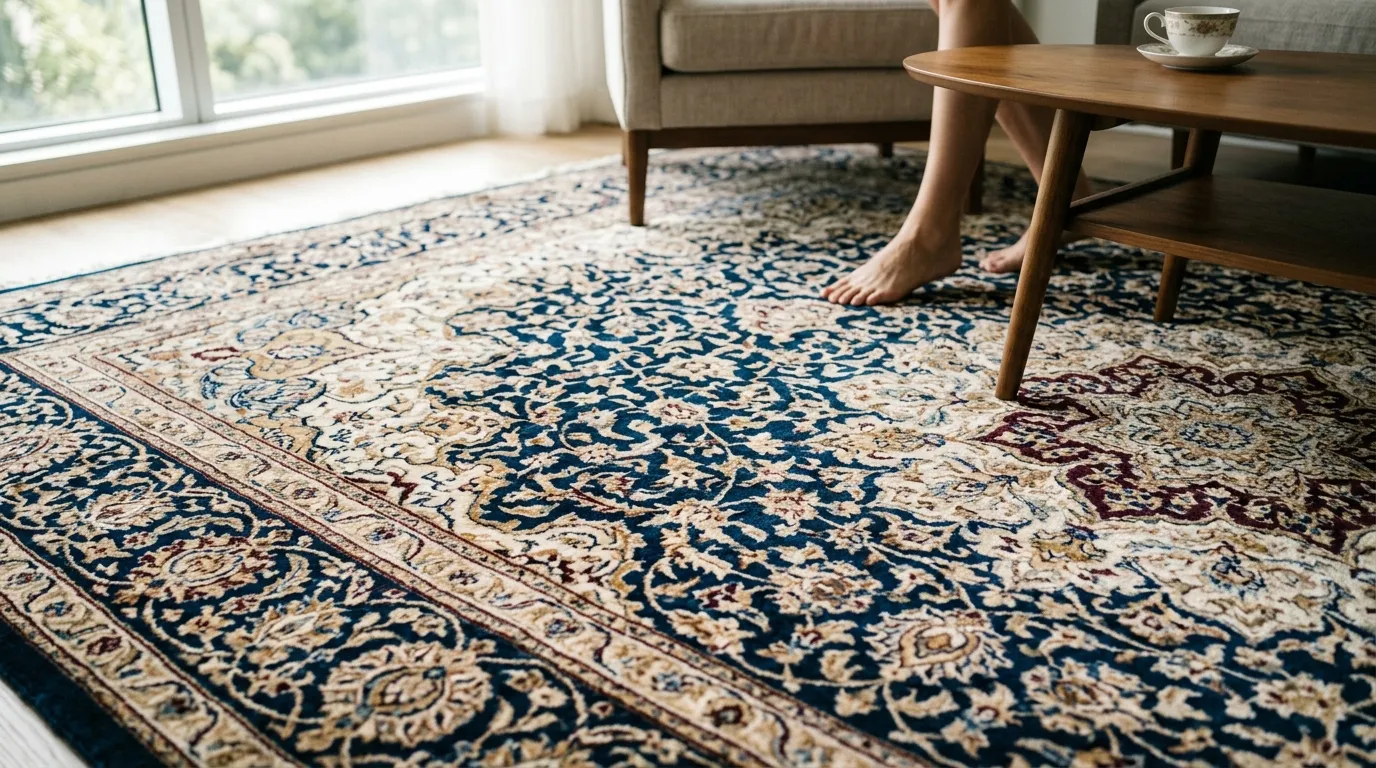
Viewing the carpet in person allows you to observe how colors shift under showroom lighting and how they may respond to natural daylight. This is particularly important for silk carpets, where directional sheen changes appearance depending on viewing angle.
You Feel the Texture and Softness
Texture affects comfort, durability, and overall experience.
By touching the carpet, you can evaluate pile height, fiber density, and softness. Wool should feel resilient and slightly springy. Silk should feel smooth and fine. Synthetic fibers may feel lighter or less elastic.
You can press the pile to see how quickly it recovers, which indicates resilience. This tactile assessment is not possible through online viewing.
You Can Inspect the Knot Quality
Knot structure determines durability and authenticity.
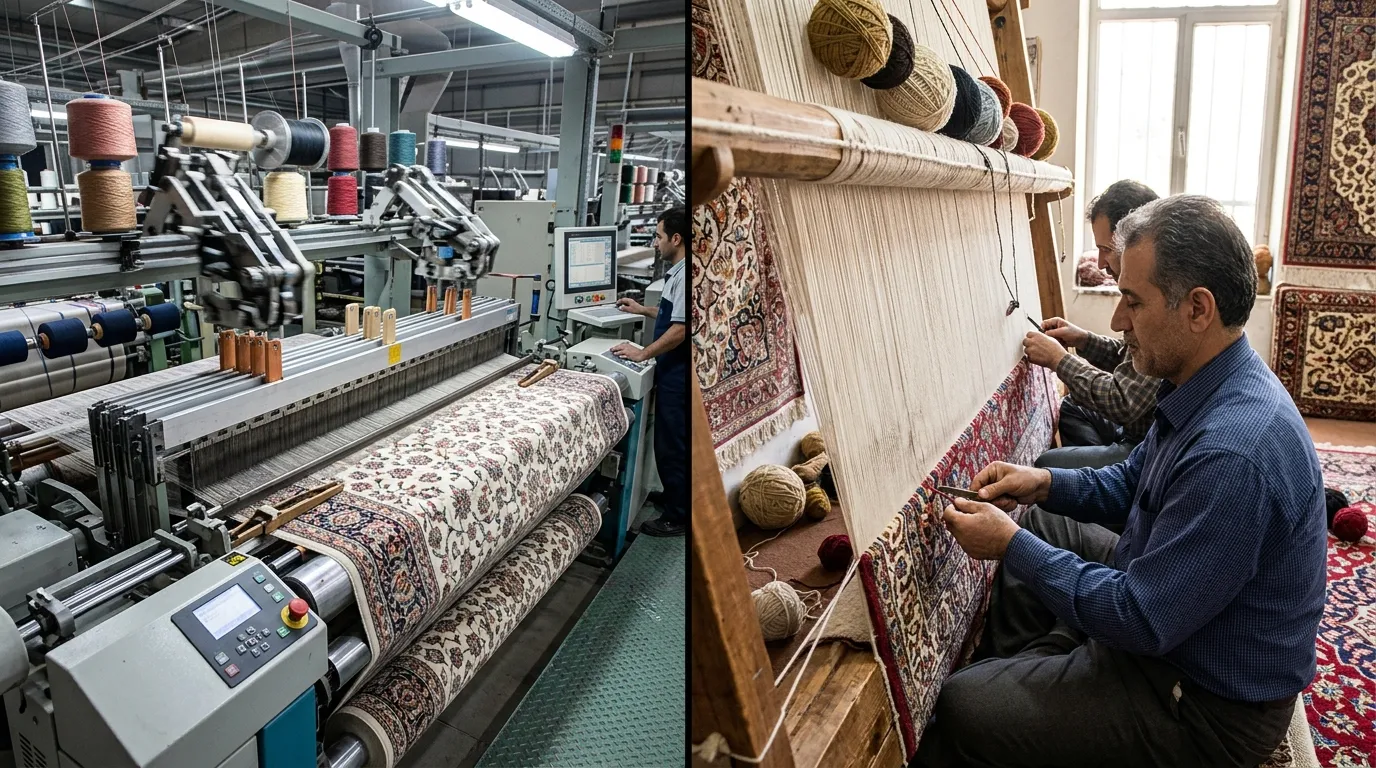
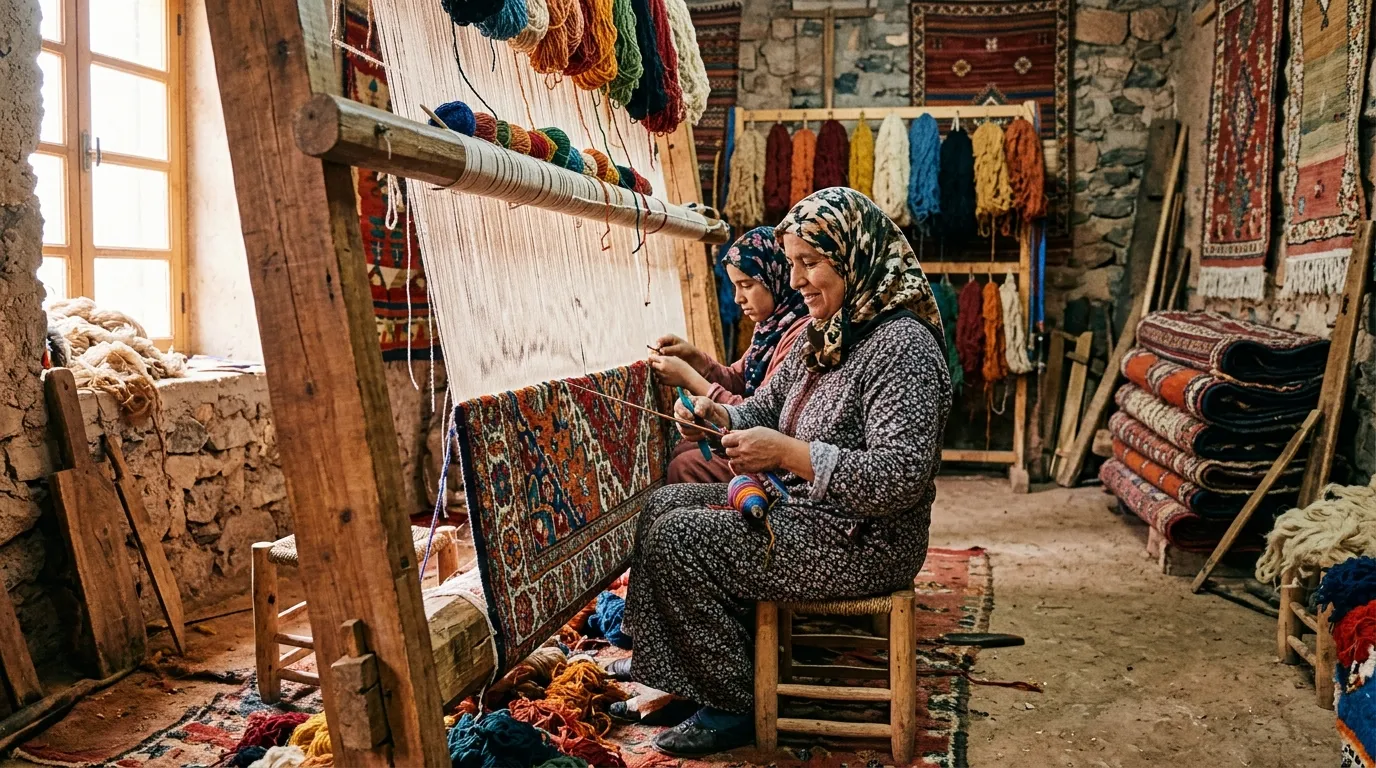
Turning the carpet over allows you to examine hand-tied knots, spacing consistency, and pattern clarity on the reverse side. Slight irregularities indicate manual craftsmanship, while perfect mechanical alignment may indicate machine production.
You can also estimate knot density by counting knots per square inch in a visible section. Higher density usually reflects finer detail and stronger construction.
You See the Exact Size and Scale
Accurate proportion is critical for interior placement.
Even when dimensions are listed online, visualizing scale in your own space can be difficult. Seeing the carpet physically helps you understand border thickness, central medallion proportion, and overall design balance.
You can compare the carpet against furniture displays or measure it directly to ensure correct fit under seating arrangements or dining tables.
You Can Compare Multiple Options Side by Side
Side-by-side comparison reveals subtle differences.
When multiple carpets are displayed together, you can directly compare knot density, material thickness, color richness, and finishing quality. Differences that seem minor online may become obvious when viewed simultaneously.
This allows you to evaluate value relative to price and craftsmanship more accurately.
You Notice Small Details
Close inspection reveals craftsmanship details.
You can examine edge binding, fringe integration, selvage stitching, and pattern alignment. Minor imperfections in handmade carpets indicate authenticity, while glued fringes or synthetic backing indicate machine production.
You can also inspect dye consistency and confirm whether color transitions are natural or artificially uniform.
You Can Check for Damage or Defects
Physical inspection allows you to detect wear, repairs, or flaws.
Look for uneven pile height, loose threads, discoloration, stains, moth damage, or backing separation. Slight irregularities may be acceptable in handmade carpets, but structural damage affects longevity.
Checking condition in person prevents surprises after purchase.
You Get Expert Advice Instantly
In-store consultation provides immediate clarification.
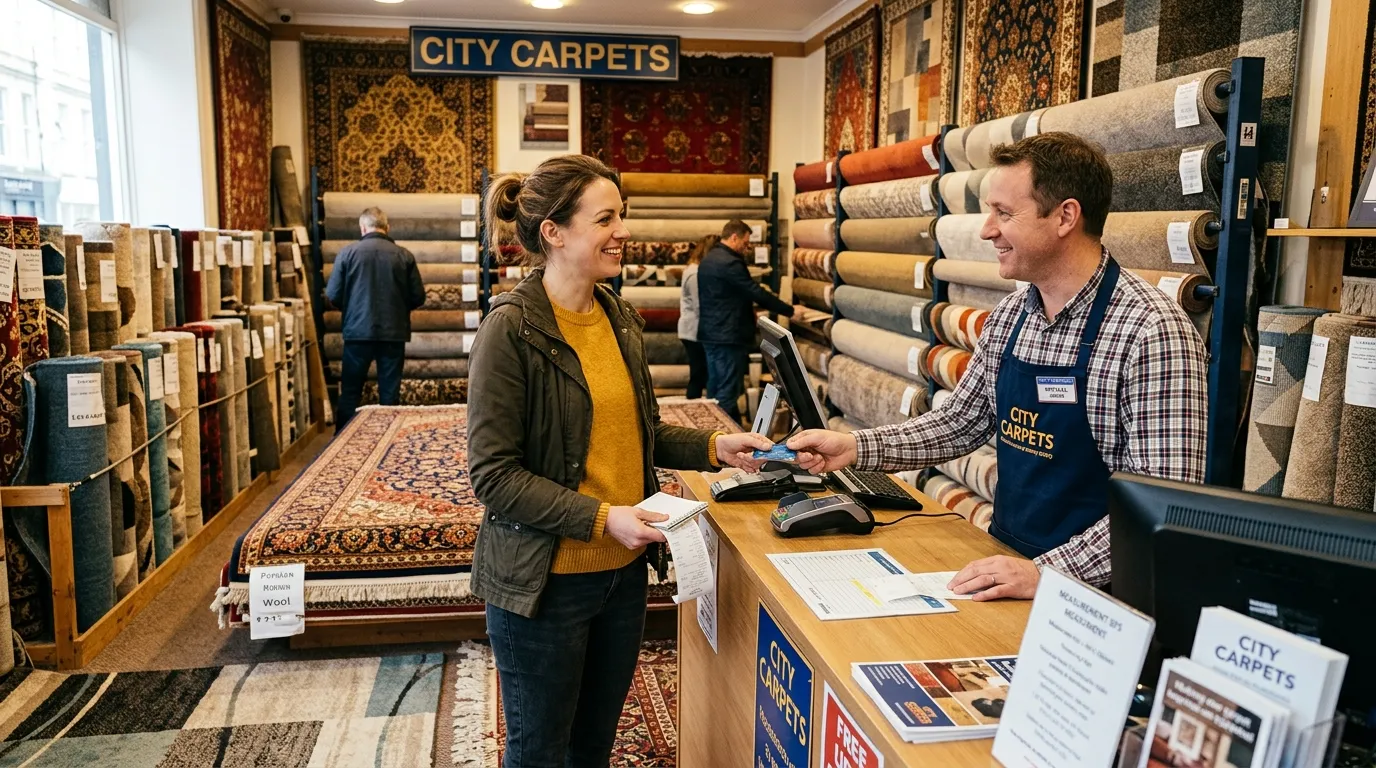
Knowledgeable sellers can explain knot type, material composition, dye method, origin region, and expected lifespan. You can ask specific technical questions and receive direct responses.
This interaction allows you to verify claims and request documentation before committing to purchase.
You May Negotiate Better
Negotiation is often more effective in person.
Direct communication allows you to discuss pricing based on size, material, knot density, or minor imperfections. Sellers may offer better terms when engaging face to face compared to fixed online pricing.
Additional services such as delivery, underlay, or cleaning may also be negotiated as part of the purchase.
You Buy With More Confidence
In-person evaluation reduces uncertainty.
When you verify color accuracy, fiber quality, knot structure, size proportion, and condition yourself, you reduce the likelihood of dissatisfaction.
Purchasing with full knowledge of material, craftsmanship, and value leads to greater long-term satisfaction and lower risk of return or replacement.
Conclusion
Seeing carpets in person before buying provides measurable advantages in quality assessment, authenticity verification, and price evaluation.
You can confirm real colors, feel texture, inspect knot construction, evaluate scale, compare multiple options, detect defects, receive expert advice, negotiate effectively, and make an informed decision.
For high-value purchases such as handmade or premium carpets, physical inspection ensures accuracy, transparency, and confidence in your investment.
Also Read: Complete Guide to Buying Persian Carpets in Dubai