
Deciding between hand-made and machine-made carpets in Sharjah depends on factors such as durability, material, climate adaptability, maintenance, and aesthetic requirements, making the choice highly context-specific rather than universally fixed.
The high temperatures, dust, sand, and variable humidity in Sharjah homes impose unique demands on carpets that influence how each type performs.
Understanding the technical differences, benefits, and limitations of both hand-made and machine-made carpets ensures you make a choice that balances long-term value, comfort, and practicality.
The Biggest Differences That Matter in Real Life
When comparing hand-made and machine-made carpets, several technical and functional aspects determine which type is better suited for your home and lifestyle in Sharjah.
Durability & Lifespan
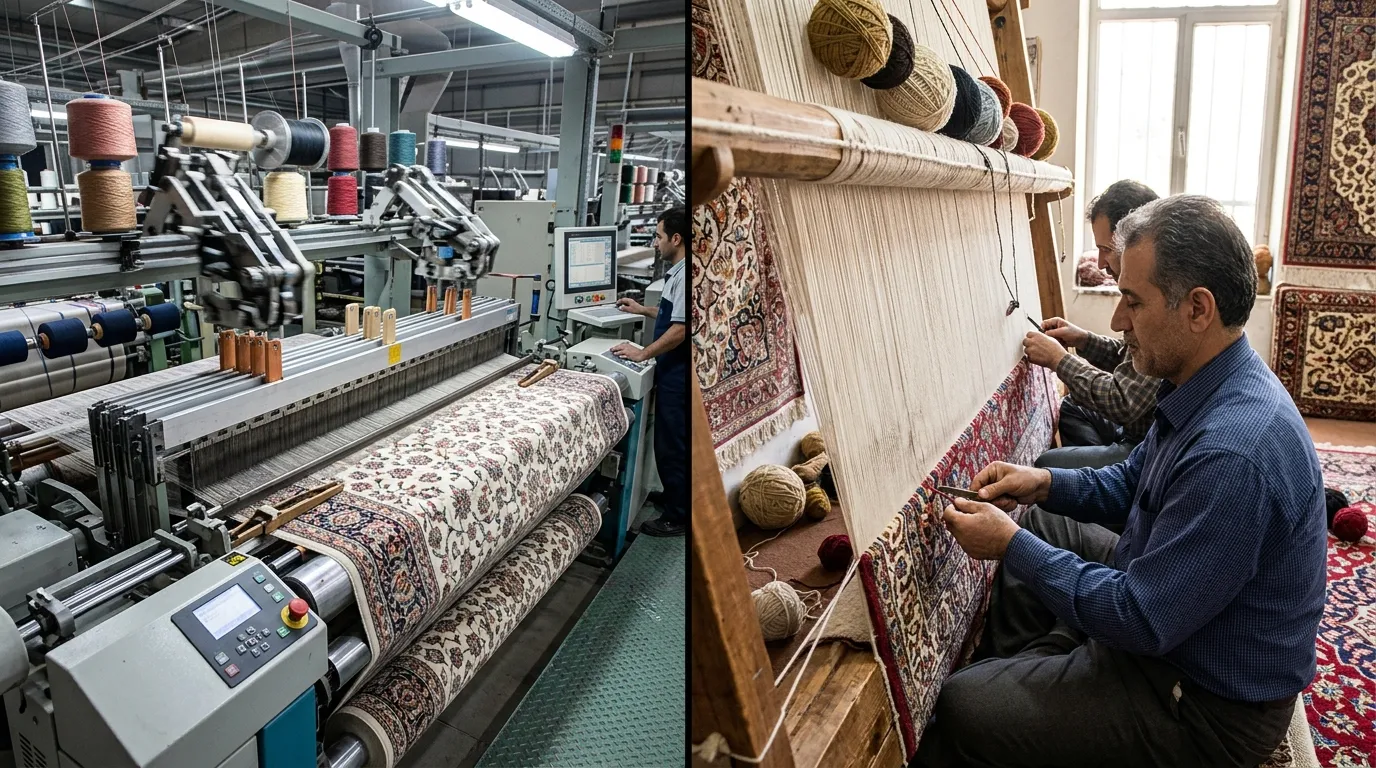
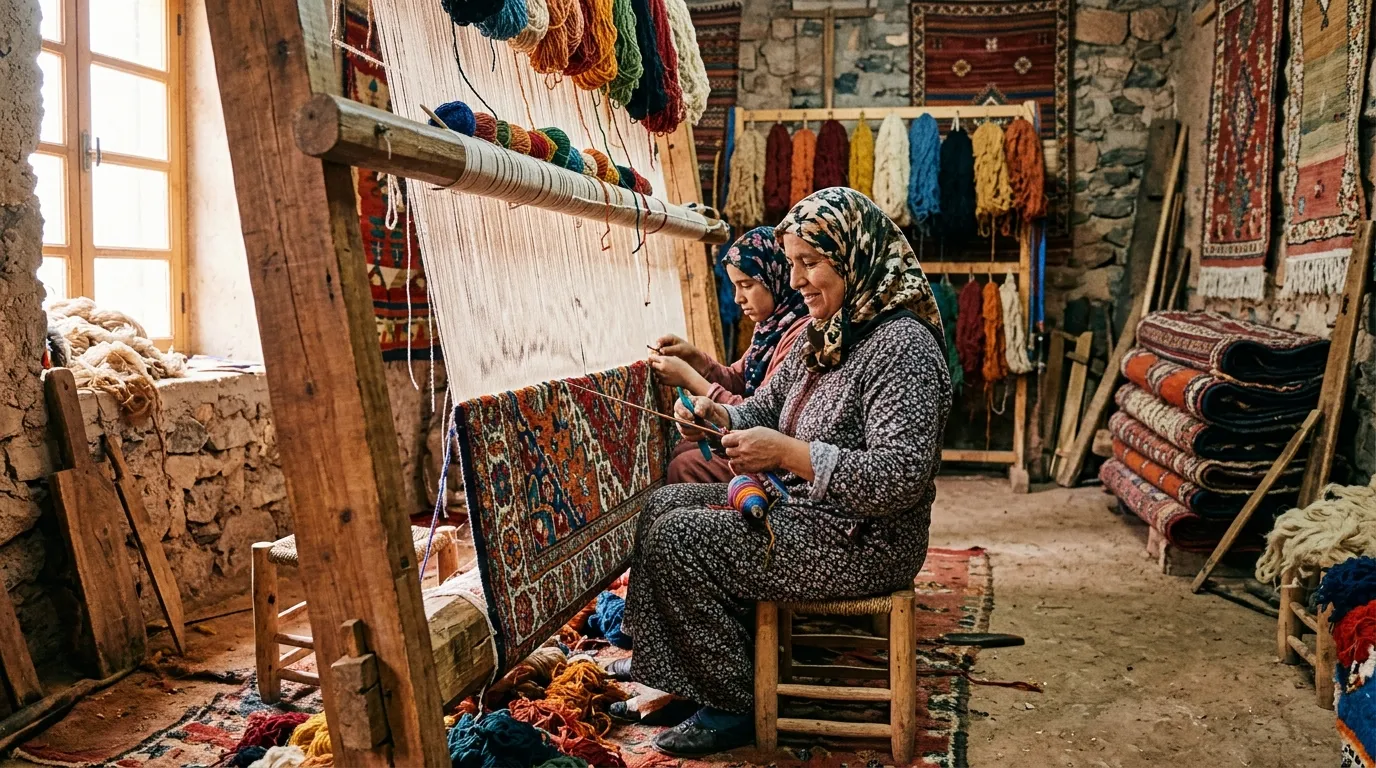
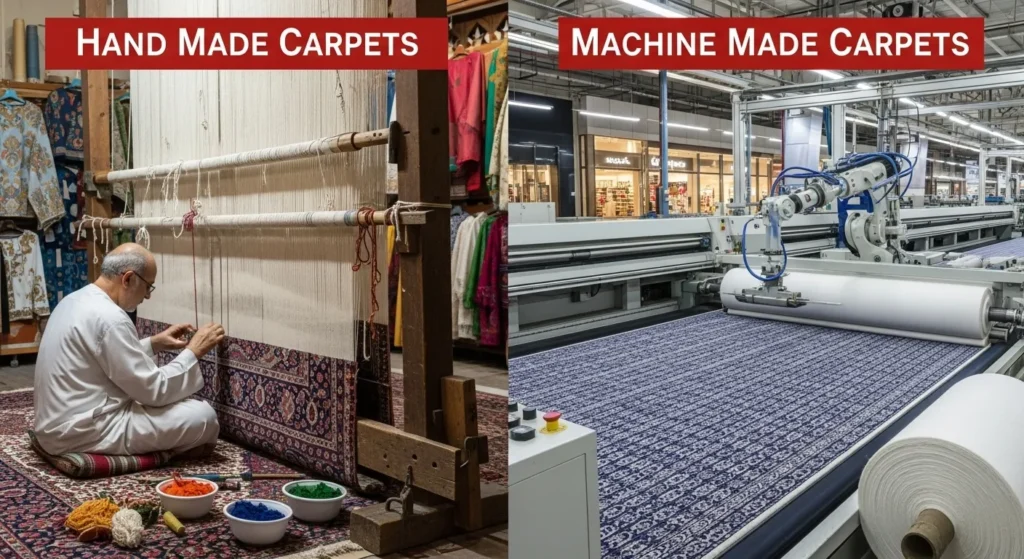
Hand-made carpets typically feature high knot density and superior fiber quality, often constructed with natural wool, silk, or a combination.
The knot density, measured in knots per square inch, directly affects resilience to wear, foot traffic, and abrasion. A hand-knotted wool carpet with 200 knots per square inch or higher can last decades with proper care.
Machine-made carpets, even with synthetic fibers like nylon or polypropylene, are produced in a continuous weaving process that prioritizes speed over knot density.
While modern machine-made carpets can last 8 to 15 years, depending on fiber and pile height, they generally compress faster, lose resilience, and show wear more visibly under heavy traffic, making them less durable in high-use areas.
Feel underfoot
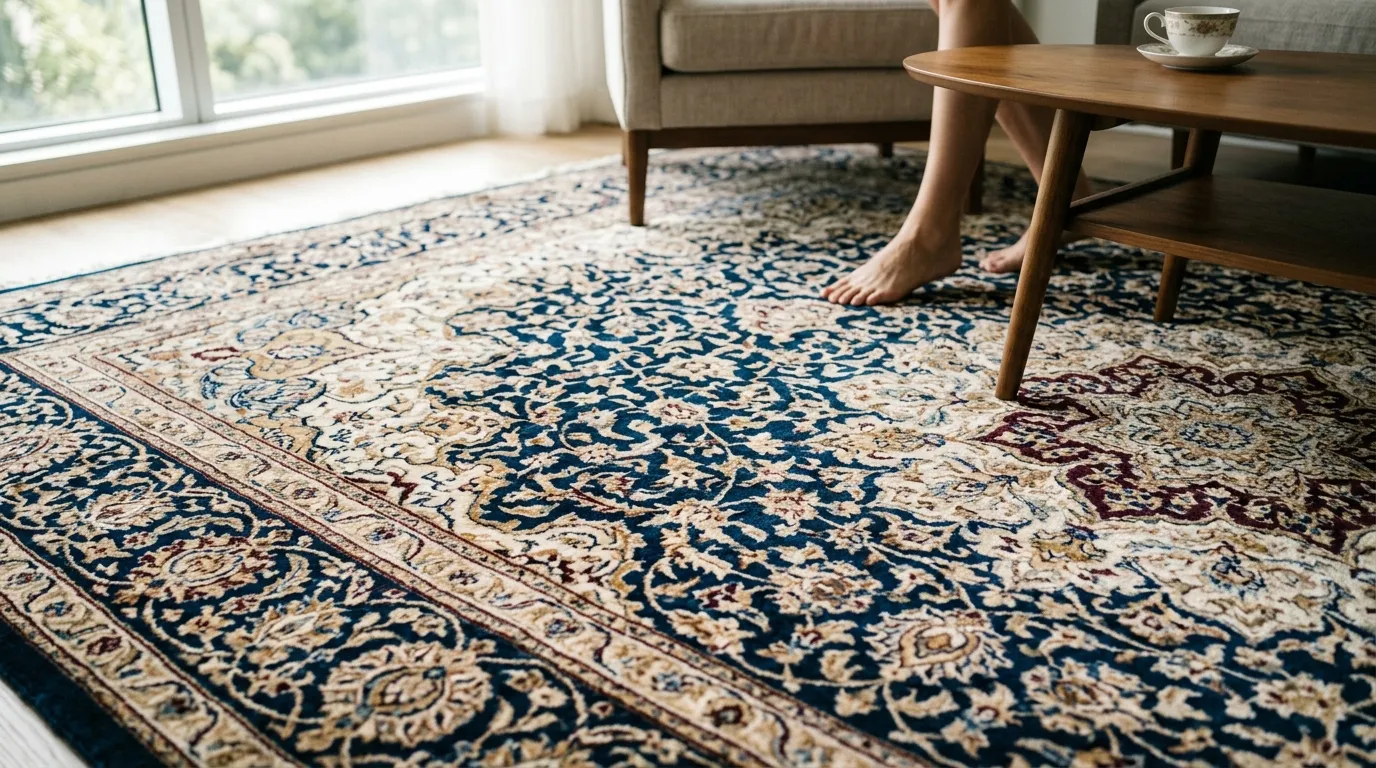
The feel underfoot is influenced by fiber type, pile construction, and knot density. Hand-made carpets usually have a softer, more supple feel due to natural fibers and precise knotting. Silk-blend hand-made carpets offer a smooth, luxurious texture, while dense wool varieties provide cushioned support.
Machine-made carpets rely on synthetics or mixed fibers, and their uniform construction can feel less resilient or “flat” compared to hand-made alternatives.
In Sharjah, where residents often walk barefoot indoors, this difference becomes noticeable in terms of comfort and thermal regulation, with hand-made carpets maintaining softness over time while machine-made carpets can feel compressed and firm.
Design & uniqueness
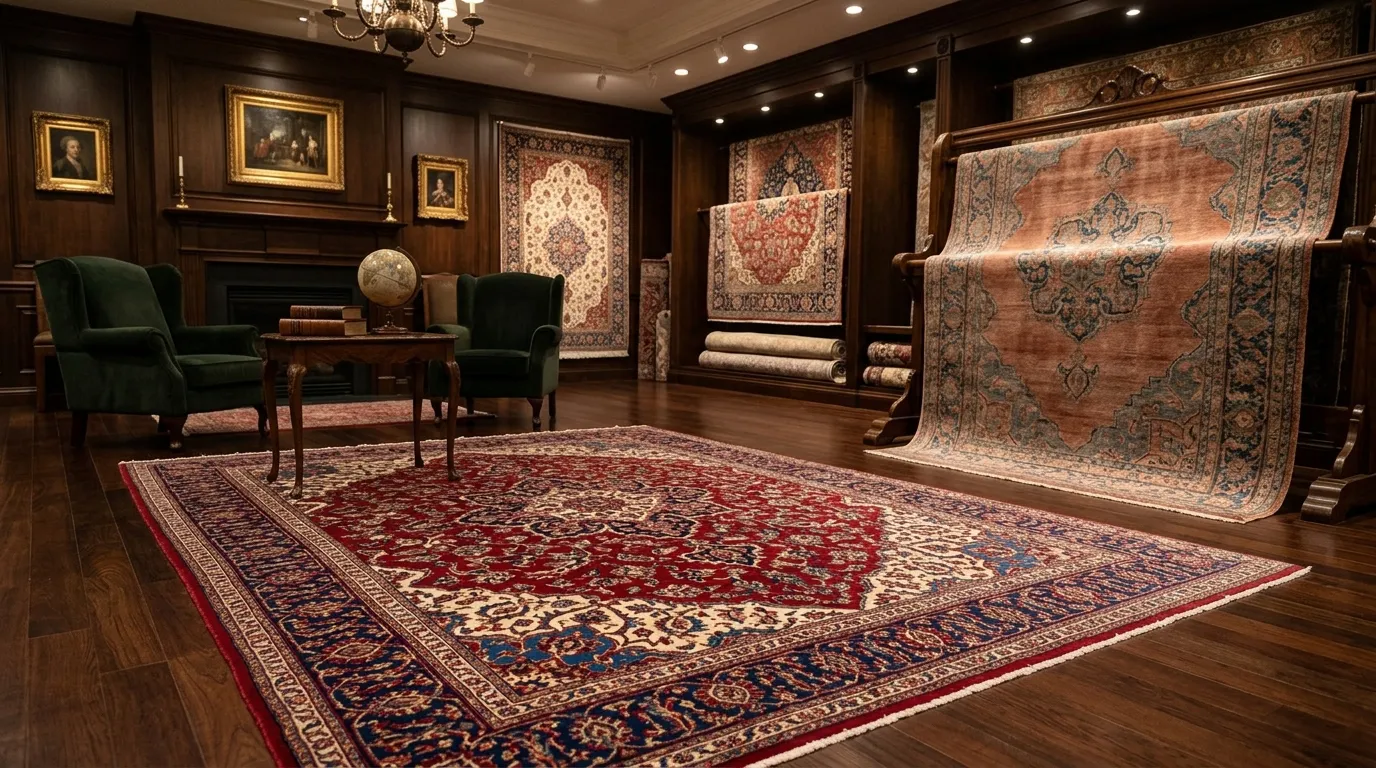
Each hand-made carpet is unique. Variations in knotting, shading, and patterning create depth and richness, often reflecting traditional motifs or artisan creativity. These subtle irregularities are considered markers of authenticity and craftsmanship.
Machine-made carpets, in contrast, are mass-produced using automated looms, ensuring exact pattern repetition across batches. While this offers consistency, it lacks the individuality and intricate detailing of hand-made pieces.
Buyers seeking cultural or artisanal value often prefer hand-made carpets, while those prioritizing uniformity or bulk installation may choose machine-made options.
Price & value
Hand-made carpets come at a premium due to labor intensity, material quality, and cultural value. High-quality hand-knotted carpets may cost multiple times more than comparable machine-made carpets. However, their longevity, durability, and aesthetic appeal often provide better long-term value if maintained correctly.
Machine-made carpets are far more affordable upfront and widely available. While they may need replacement sooner, lower initial cost can be advantageous for temporary setups, rental properties, or high-traffic spaces where replacement every decade is acceptable.
Maintenance & cleaning
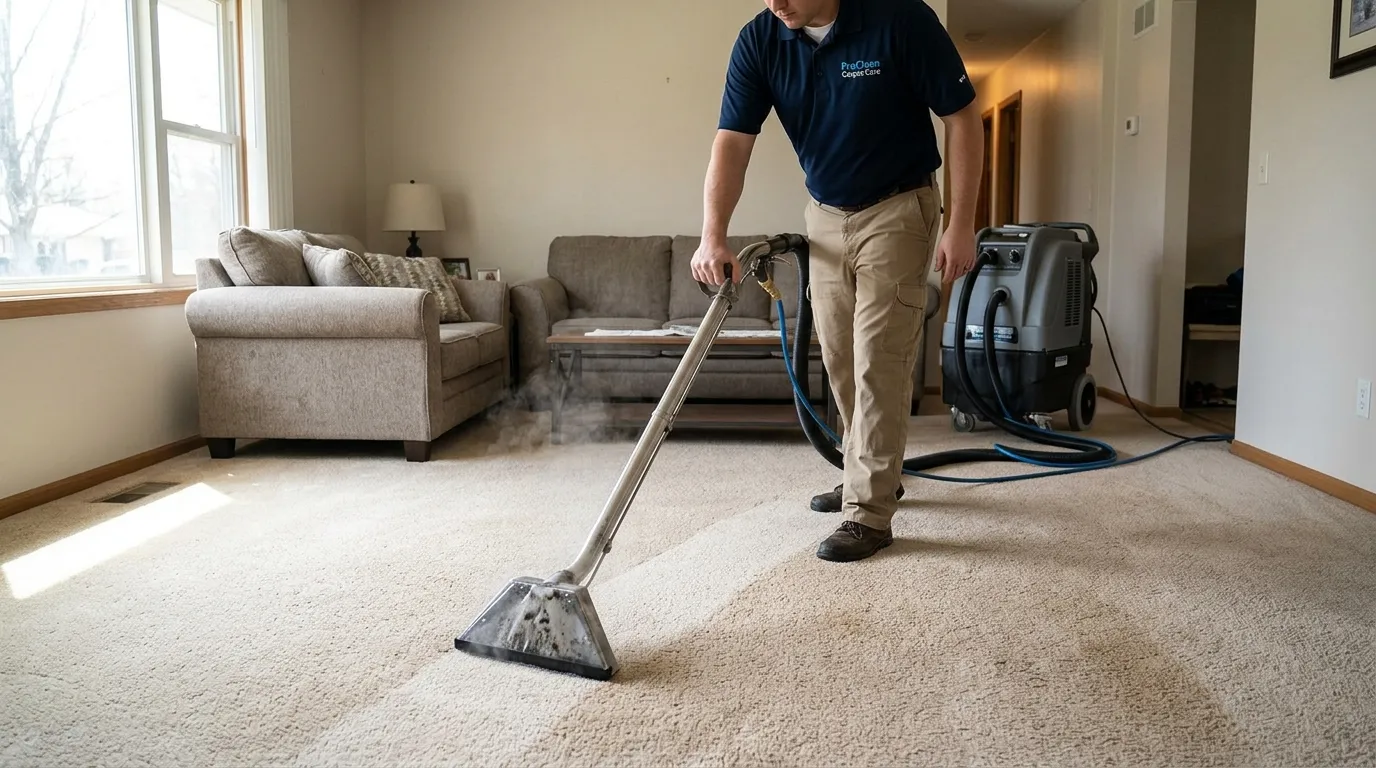
Hand-made carpets require careful maintenance due to natural fibers and delicate knotting. Spot cleaning, professional deep cleaning, and humidity control are essential to preserve structure and color.
In Sharjah’s dry, dusty environment, vacuuming alone may not remove embedded sand in high-pile hand-made carpets, making periodic professional cleaning necessary.
Machine-made carpets are generally easier to clean due to synthetic fibers that repel stains and tolerate low-moisture cleaning methods.
Loop pile or cut pile synthetics resist abrasion and can withstand more aggressive vacuuming, making them practical for busy households or spaces with children and pets.
Material Comparison
Material selection is critical for performance in Sharjah homes. Hand-made carpets predominantly use wool, silk, or cotton.
Wool is naturally heat-resistant, fire-retardant, and resilient, while silk provides luxury but is sensitive to abrasion and humidity. Cotton backing is breathable but can absorb moisture if exposed.
Machine-made carpets rely on polypropylene, polyester, or nylon. Polypropylene is moisture-resistant and inexpensive but flattens faster.
Nylon has excellent durability and abrasion resistance, while polyester offers color retention and softness but is less resilient under heavy use. Fiber choice directly affects thermal comfort, durability, stain resistance, and maintenance frequency.
How Sharjah Climate & Lifestyle Changes the Decision?
Sharjah’s hot, dry climate with high sand exposure demands carpets that resist heat, abrasion, and particle accumulation. High-pile or delicate silk carpets may trap sand, degrade under sunlight, or require frequent professional cleaning.
For daily use areas like living rooms, hallways, or majlis spaces, low- to medium-pile wool hand-made carpets or tightly woven synthetic machine-made carpets perform better.
Bedrooms or formal areas can accommodate higher-pile hand-made carpets for comfort and aesthetic appeal, as these rooms typically experience less foot traffic and dust exposure.
Room-by-Room Recommendations (Sharjah Home Guide)
In high-traffic areas such as entryways, hallways, and kitchens, machine-made carpets with dense, low-pile construction and synthetic fibers provide durability, stain resistance, and easy cleaning.
In living rooms and majlis areas, medium-pile hand-made wool carpets with natural dyes offer resilience, luxury underfoot, and cultural appeal. They handle moderate foot traffic while enhancing aesthetics.
Bedrooms and guest rooms can accommodate hand-made silk-blend or high-quality wool carpets, as foot traffic is lower and the tactile comfort is prioritized. These rooms benefit from the unique design and softness of artisanal carpets.
Bathrooms, balconies, and outdoor-adjacent spaces should avoid high-pile hand-made carpets entirely. Synthetic, moisture-resistant, low-pile options are safer and easier to maintain.
Mistakes to Avoid When Buying Carpets in Sharjah
- Ignoring pile height and density relative to traffic and sand exposure.
- Choosing delicate silk or high-pile carpets for entryways or high-traffic rooms.
- Overlooking material heat tolerance and breathability, which affects comfort and fiber longevity.
- Failing to confirm maintenance requirements and professional cleaning availability.
- Relying solely on online images, which may misrepresent color, texture, and pattern depth.
- Neglecting proper underlay, which reduces thermal insulation, comfort, and carpet lifespan.
These mistakes can significantly shorten carpet life and increase replacement costs in Sharjah homes.
Final Verdict
There is no universal answer to whether hand-made or machine-made carpets are better in Sharjah. Hand-made carpets excel in longevity, tactile comfort, design uniqueness, and cultural value. They are best suited for moderate traffic areas, formal rooms, and homeowners who value artistry and long-term durability.
Machine-made carpets provide cost-effective, low-maintenance solutions for high-traffic areas, rental properties, or temporary installations. They perform well under sand, heat, and frequent cleaning, making them highly practical for busy Sharjah households.
The best choice depends on the intended room, traffic levels, maintenance willingness, budget, and desired aesthetic.
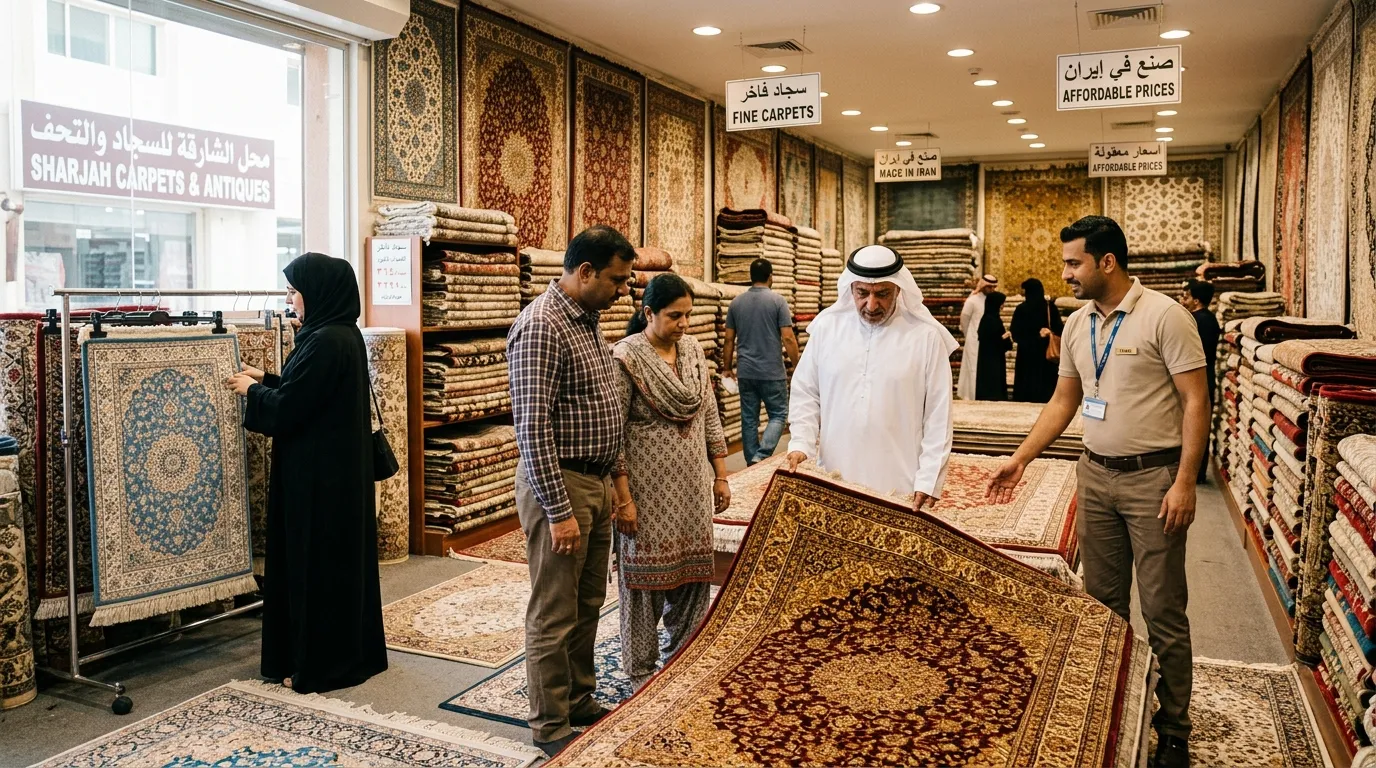
Evaluating carpets physically, considering fiber properties, weave density, pile height, and environmental compatibility ensures the final purchase meets Sharjah climate requirements and lifestyle needs effectively.
Also Read: How to Choose the Right Carpet for Sharjah Homes & Climate?