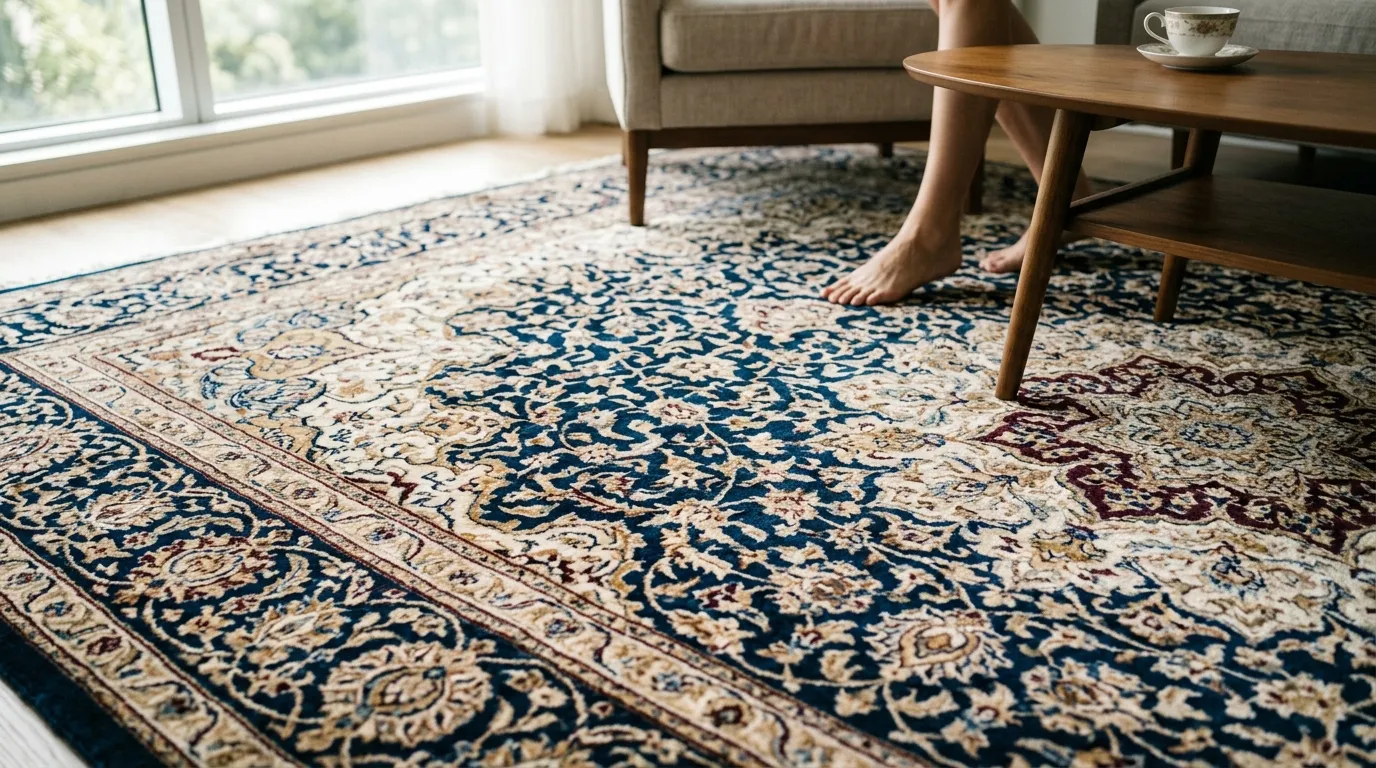

Carpet re-stretching improves carpet life by restoring proper tension across the surface, removing looseness, and preventing uneven wear that gradually damages both fibers and backing over time.
Most carpets do not fail suddenly. They slowly degrade because of movement, shifting, and slack that develops after installation. Once the carpet starts to loosen, every step creates small friction points and pressure zones that speed up wear in very specific areas. Re-stretching fixes this by bringing the carpet back to its original tight installation state, which directly slows down long-term damage and extends usable life.
1. Removes Wrinkles and Bumps
Wrinkles and bumps usually appear when the carpet loses grip at the edges or expands slightly due to humidity, furniture movement, or regular foot traffic.
When the surface is uneven, weight is no longer distributed evenly across the floor. Instead, certain raised or folded areas take more pressure than others. This creates early breakdown in those zones.
Re-stretching pulls the carpet back into a tight, uniform position. The surface becomes flat again, which restores even pressure distribution and removes stress points that would otherwise shorten carpet life.
2. Prevents Early Wear and Tear
One of the biggest issues with loose carpet is constant micro-movement.
Even if the carpet looks stable, it shifts slightly under each step. That small movement creates friction between fibers and backing, and over time this leads to thinning, matting, and uneven texture.
Re-stretching eliminates this movement by anchoring the carpet tightly. Once secured, the fibers no longer rub against each other unnecessarily, which slows down wear and keeps the carpet looking newer for longer
3. Protects Carpet Backing
The backing is the structural base that holds the carpet together, and it is often the first part to weaken when tension is lost.
Loose carpets bend, fold, and flex when walked on. That repeated flexing stresses the adhesive layers and backing material, which can eventually lead to separation or cracking.
By re-stretching the carpet, you restore stability and reduce this flexing effect. The backing remains in a fixed position, which helps preserve its strength and prevents long-term structural failure.
4. Improves Appearance
Appearance is usually the first noticeable issue when a carpet becomes loose.
Wrinkles, waves, and uneven surfaces create shadows and distort the texture of the carpet pile. Even if the carpet is clean, it can look old or poorly maintained.
Re-stretching smooths the entire surface so the pile stands evenly again. Light reflects consistently across the floor, and the room immediately looks cleaner and more maintained without replacing the carpet.
5. Reduces Risk of Damage
Loose carpet sections create practical risks beyond appearance.
Raised edges or wrinkled sections can catch on vacuum cleaners, furniture legs, or shoes. Over time, this can lead to fraying, tearing, or permanent edge damage.
Re-stretching removes these loose points and secures the carpet firmly against the floor. This reduces accidental stress on vulnerable areas and helps prevent avoidable damage in daily use.
6. Makes Cleaning Easier
Cleaning performance is directly affected by carpet tension.
When carpets are loose, vacuum cleaners cannot maintain full contact with the surface. Dust and debris get trapped in folds and uneven sections, making cleaning less effective.
Once re-stretched, the carpet becomes flat and uniform again. This allows cleaning tools to glide smoothly across the surface, improving dust removal and reducing long-term dirt buildup that can damage fibers.
7. Maintains Proper Installation
Carpets are installed with specific tension so they stay flat and stable over time. However, this tension naturally weakens due to environmental conditions, movement, and usage.
Re-stretching essentially resets the installation. It pulls the carpet back into its original position and re-secures it at the edges, restoring the balance it had when first installed.
This helps maintain structural stability without needing a full replacement, especially when the carpet itself is still in good condition.
8. Saves Money Over Time
Carpet replacement is expensive, while re-stretching is a relatively low-cost maintenance step that extends usable life.
By fixing looseness early, you prevent deeper damage such as backing failure, fiber wear, and edge tearing. These issues are significantly more expensive to fix later.
Over time, regular maintenance through re-stretching reduces the frequency of replacements and helps homeowners or businesses manage flooring costs more efficiently.
9. Extends Overall Carpet Lifespan
When you combine all effects together, reduced movement, better tension, improved cleaning, and structural protection, the overall lifespan of the carpet increases significantly.
Instead of wearing out unevenly, the carpet maintains a balanced structure across the entire surface. This slows down aging and preserves both visual quality and physical durability.
Re-stretching does not just fix a visible issue, it stabilizes the entire carpet system so it can continue performing as intended for many more years.
Conclusion
Carpet re-stretching improves carpet life by restoring proper tension, preventing movement-based wear, and protecting both fibers and backing from long-term stress.
What begins as minor looseness can gradually turn into structural damage, uneven wear, and reduced durability if ignored. Re-stretching interrupts that process early, bringing the carpet back to a stable condition that supports longer use and better performance without requiring replacement.
Also Read: Benefits of Seeing Carpets in Person Before Buying