
You can clean carpets at home without damaging them by using gentle methods that remove dirt and stains while protecting the carpet fibers, backing, and color integrity, which is essential if you want your carpet to last years instead of wearing out early. Many carpets in Sharjah get damaged not because they are low quality, but because they are cleaned too aggressively, too frequently, or with the wrong products.
If you want your carpet to stay clean, fresh, and structurally sound, the goal is controlled cleaning, not harsh scrubbing. This guide explains exactly how to clean carpets at home safely, step by step, while avoiding the mistakes that shorten carpet lifespan.
Vacuum Regularly
Regular vacuuming is the single most important step in carpet care, especially in dusty environments. Dust, sand, and fine debris settle deep into carpet fibers and act like sandpaper when walked on, slowly breaking fibers from the inside.
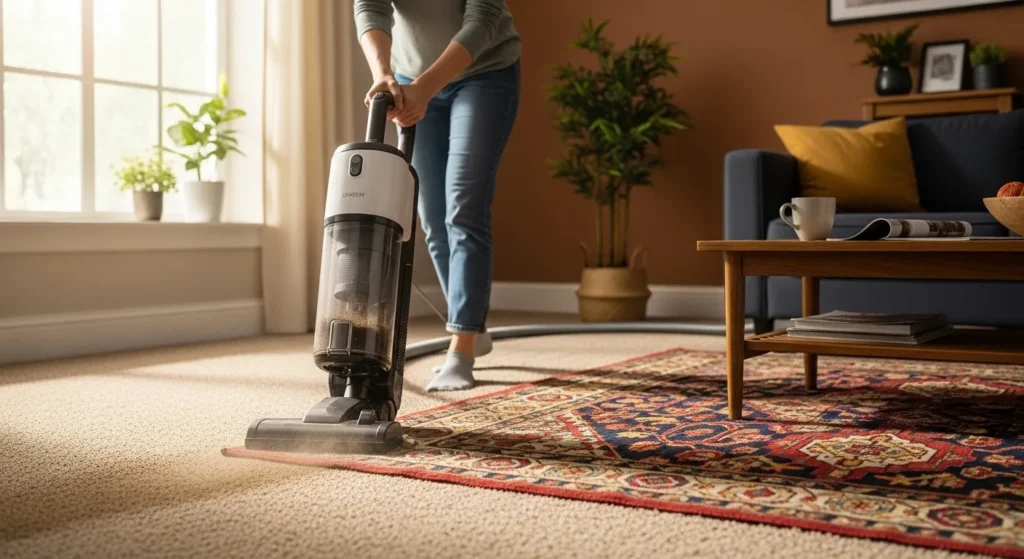
Vacuuming removes these abrasive particles before they cause permanent wear. For most homes, vacuuming two to three times per week is sufficient, while high-traffic areas may need daily attention. Use a vacuum with adjustable height settings so the suction cleans the pile without pulling or stressing the fibers.
For carpets with higher pile or handmade rugs, vacuum gently and avoid rotating brushes that can damage delicate fibers. Vacuuming is preventative cleaning and does more to extend carpet life than occasional deep cleaning.
Clean Spills Right Away
Spills should always be addressed immediately, regardless of the carpet material. Liquids penetrate fibers quickly, and once they reach the backing, stains become much harder to remove and can cause odor or mold issues.
When a spill occurs, act within minutes. Remove excess liquid using a clean, absorbent cloth or paper towel. Press gently to absorb the spill instead of spreading it. The faster the spill is absorbed, the less it bonds with the fibers.
Delaying spill cleanup is one of the most common causes of permanent carpet stains, especially with drinks, oils, and food-based liquids.
Use Mild Soap Only
When cleaning carpets at home, always use mild soap or carpet-specific cleaners designed for gentle fiber care. Strong detergents, degreasers, or household cleaners strip protective coatings from fibers and weaken the carpet structure.
A simple solution of lukewarm water and a small amount of mild liquid soap is usually sufficient for most stains. The goal is to lift dirt without saturating the carpet. Excess soap residue attracts more dirt over time, making carpets look dirty faster.
Never use powdered detergents or products that foam excessively, as they are difficult to rinse out completely.
Test Cleaner on a Small Area
Before applying any cleaning solution to a visible area, test it on a small, hidden section of the carpet. This step prevents color bleeding, fading, or fiber damage.
Apply a small amount of the cleaner, blot gently, and wait several minutes to observe any reaction. If the color remains stable and the texture unchanged, it is safe to proceed.
Skipping this test can result in irreversible damage, especially on wool, silk-blend, or handmade carpets where dyes may be sensitive.
Blot Stains, Don’t Rub
Blotting is the correct method for stain removal because it lifts the stain upward without forcing it deeper into the fibers. Rubbing spreads the stain and damages the pile by breaking fiber tips.
Use a clean cloth and press gently from the outside of the stain toward the center. Continue blotting until no more color transfers to the cloth. Replace the cloth frequently to avoid reapplying dirt.
This technique preserves persian carpet texture and prevents visible wear marks caused by aggressive scrubbing.
Use Soft Brushes
If brushing is required, always use soft-bristled brushes designed for carpet care. Hard brushes damage fibers, distort pile direction, and cause fuzzing or thinning.
Soft brushes help loosen dirt particles without cutting or tearing fibers. Brush lightly and in one direction to maintain uniform appearance.
For delicate carpets such as wool or handmade rugs, brushing should be minimal or avoided altogether unless recommended by the manufacturer.
Dry Fully Before Use
Proper drying is critical after any carpet cleaning. Moisture trapped in carpet fibers or backing can lead to odor, mold growth, and weakened adhesive layers.
After cleaning, ensure good airflow by opening windows or using fans. Avoid walking on the carpet until it is completely dry, as damp fibers flatten easily and trap dirt.
Never place furniture back on damp carpets, as this causes compression marks and moisture retention underneath heavy objects.
Avoid Bleach and Strong Chemicals
Bleach, ammonia, and strong chemical cleaners should never be used on carpets. These products break down fibers, cause discoloration, and weaken backing materials.
Even diluted bleach damages synthetic carpets and permanently ruins natural fibers like wool or silk. Strong chemicals also leave residues that attract dirt and accelerate re-soiling.
If a stain does not respond to mild cleaning, it is safer to consult a professional cleaner rather than increasing chemical strength at home.
Conclusion
Cleaning carpets at home without damaging them is about consistency, restraint, and using the right techniques rather than aggressive cleaning. Regular vacuuming removes damaging particles, immediate spill cleanup prevents permanent stains, mild cleaners protect fiber integrity, and gentle handling preserves texture and color.
Avoiding harsh chemicals, excessive moisture, and rough tools ensures that carpets maintain their appearance and structure over time. When done correctly, home carpet cleaning keeps carpets hygienic, visually appealing, and durable without shortening their lifespan.
Also Read: Carpet Prices in Sharjah: What Affects Cost & How to Save Money