Carpet prices in Sharjah vary widely because cost is determined by material quality, origin, weaving method, size, and seller practices rather than appearance alone.
Two carpets that look similar at first glance can differ significantly in durability, lifespan, and real value. Understanding what drives carpet pricing in Sharjah helps buyers avoid overpaying and make informed decisions that balance budget with long-term performance.
Sharjah’s carpet market includes everything from affordable machine-made rugs to high-value hand-knotted Persian pieces.
Prices are influenced not only by the carpet itself but also by where and how it is sold. Knowing these details is the key to saving money without sacrificing quality.
Average Carpet Prices in Sharjah
There is no single standard price for carpets in Sharjah, but general ranges help set expectations. Machine-made carpets made from synthetic fibers are the most affordable and are commonly used in apartments and rental properties, usually ranging from AED 80 to AED 400 for small sizes and AED 300 to AED 900 for medium sizes. Hand-woven and hand-knotted carpets sit at the higher end due to labor intensity and material quality.
Small machine-made carpets typically cost far less than large hand-knotted wool or silk carpets. Medium-sized wool carpets fall somewhere in between, often priced around AED 800 to AED 2,500, depending on knot density and origin.
Silk carpets, especially authentic Persian silk, represent the highest price segment in Sharjah markets, where prices commonly start from AED 3,000 and can exceed AED 15,000+ for premium pieces.
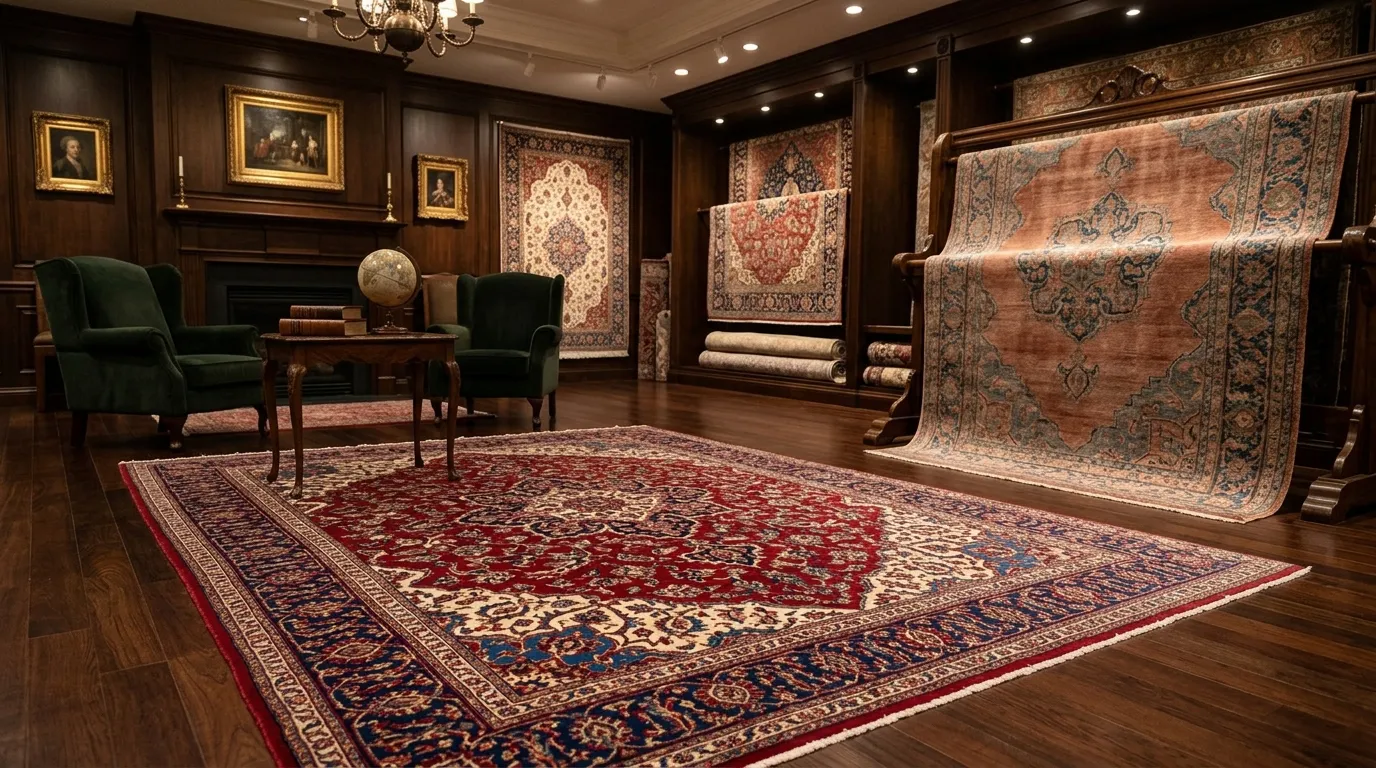
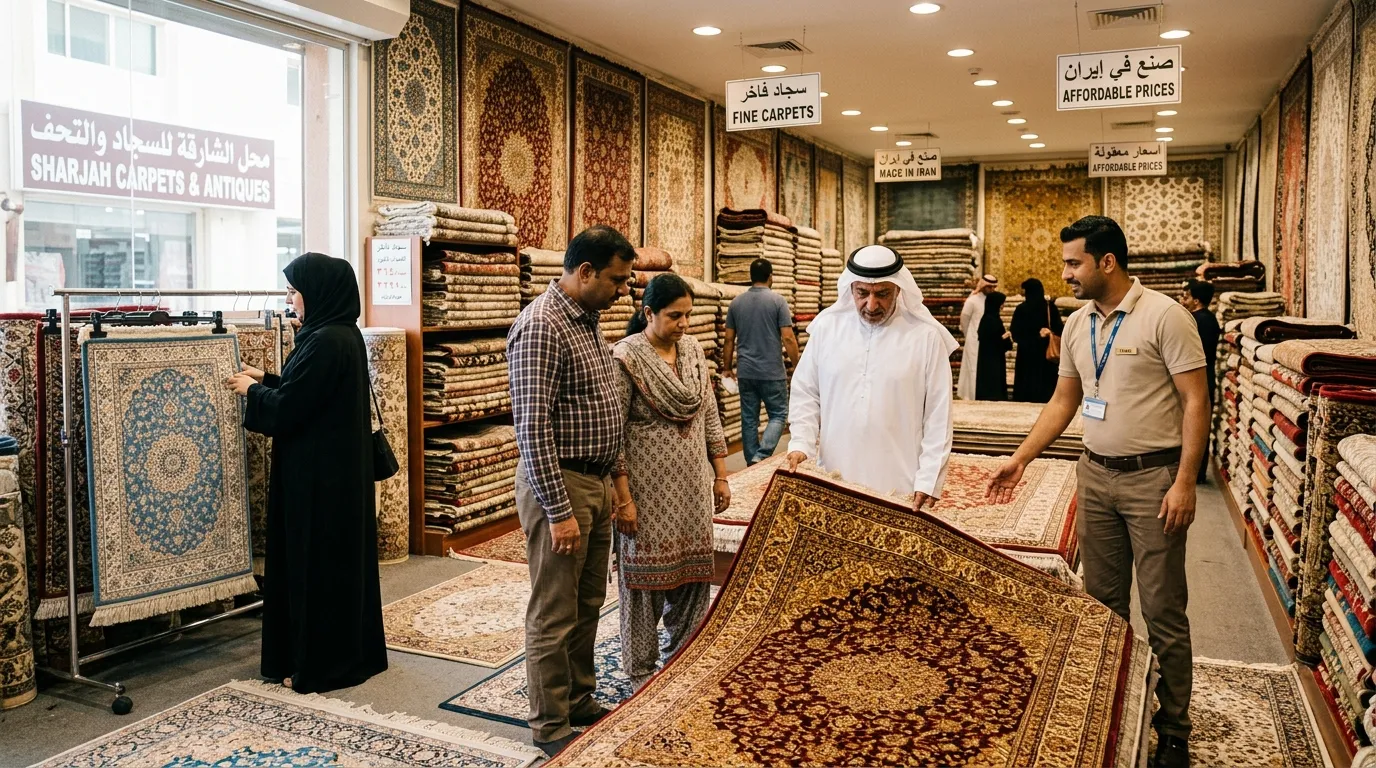
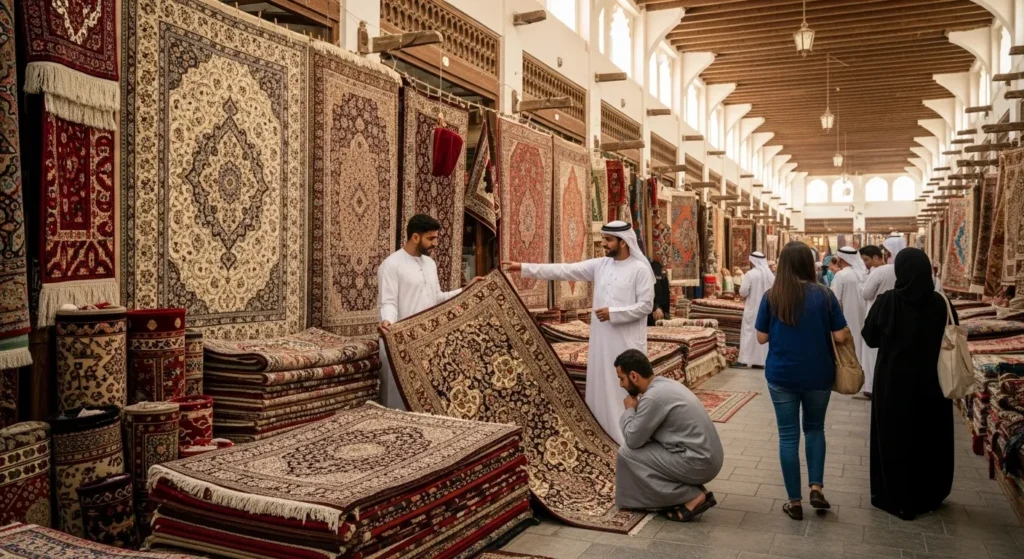
Price differences are also influenced by location. Carpet souks and local markets usually offer more competitive pricing than high-end showrooms, even for similar products.
Factors That Affect Carpet Prices in Sharjah
Carpet Material
Material is one of the most important price drivers. Wool carpets are generally more expensive than synthetic ones because wool is durable, naturally resilient, and ages well. High-quality wool absorbs dyes better and retains shape longer, which increases cost.
Silk carpets are significantly more expensive due to the cost of silk fibers and the precision required in weaving. Silk adds shine, softness, and fine detailing, but it also increases maintenance needs.
Synthetic materials such as polypropylene, polyester, and nylon are more affordable. These carpets are widely used in Sharjah because they resist stains and are easy to clean, but they do not last as long as natural fiber carpets.
Carpet Origin
Origin plays a major role in pricing. Iranian carpets are generally priced higher due to established weaving traditions, higher knot density, and global reputation. Turkish carpets range widely in price depending on whether they are hand-knotted or machine-made.
Afghan and Pakistani carpets are often more affordable than Iranian ones while still offering hand-made quality. Machine-made carpets from Europe or Asia are usually cheaper and priced based on brand rather than craftsmanship.
In Sharjah, sellers often highlight origin as a selling point, but buyers should verify authenticity, as labels alone do not guarantee quality.
Carpet Size
Carpet size directly affects cost because larger carpets require more material and labor. Price increases are not linear. A carpet twice the size can cost more than double due to increased weaving time and complexity.
Custom sizes increase costs further, especially for hand-made carpets. Standard sizes are generally more affordable and easier to resell or replace.
Measuring the space accurately helps avoid paying extra for unnecessary size or customization.
Carpet Weaving Type
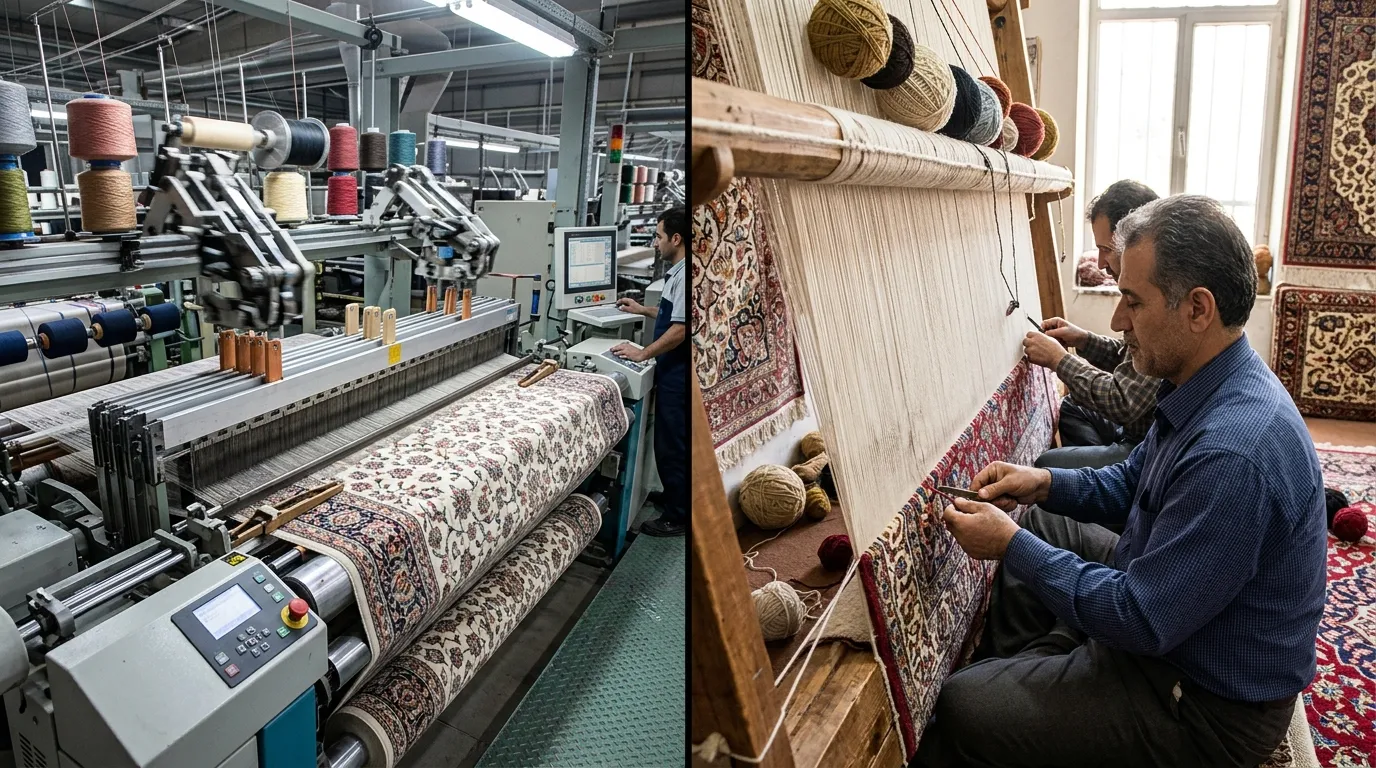
Hand-knotted carpets are the most expensive due to manual labor and time investment. Each knot is tied individually, which results in high durability and longer lifespan.
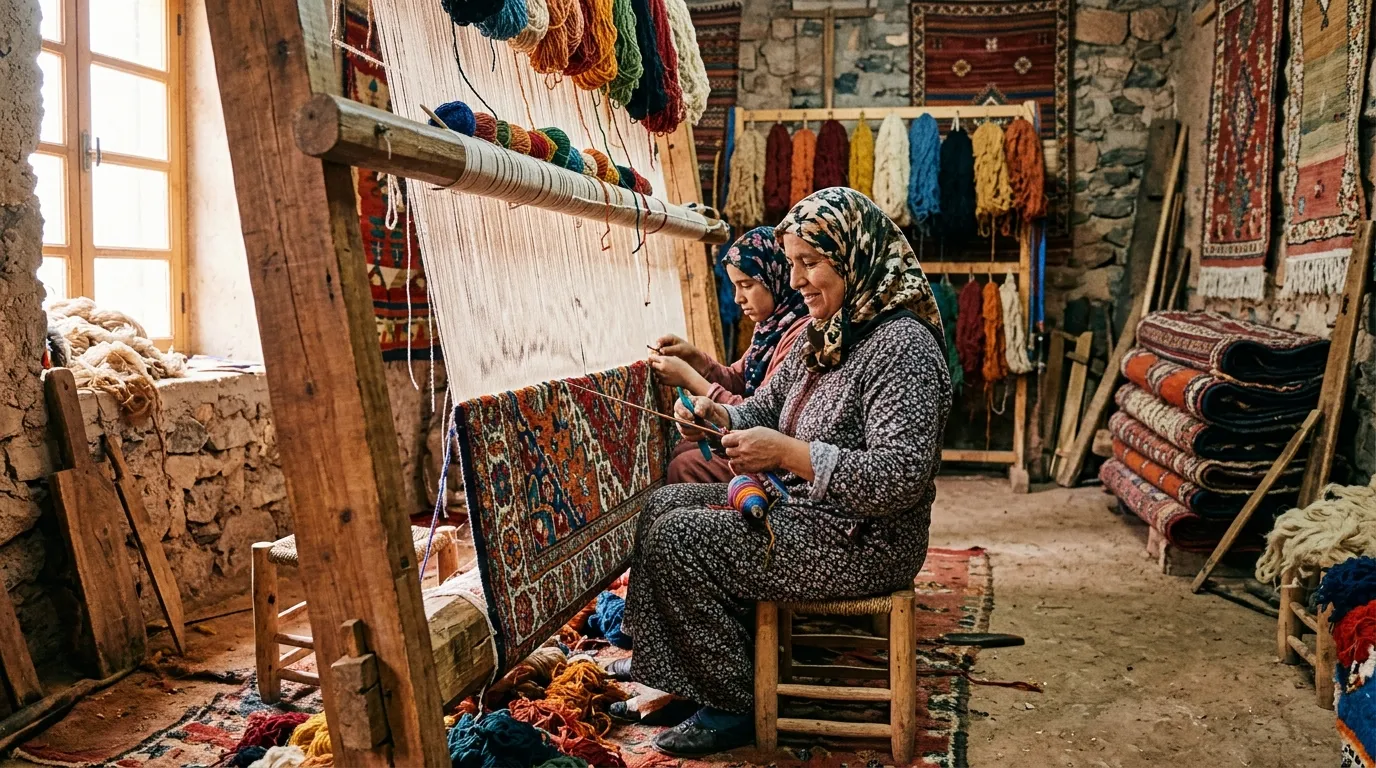
Hand-woven carpets, such as flat-weaves, are less expensive than hand-knotted but still cost more than machine-made options.
Machine-made carpets are the most affordable because they are mass-produced. While visually appealing, they have shorter lifespans and lower resale value.
Pile Height and Density
Pile height and knot density affect both comfort and price. High-density carpets with tightly packed knots cost more because they require more material and labor.
Low-density carpets are cheaper but wear out faster. High pile carpets may feel plush but trap dust more easily, which can increase maintenance costs in Sharjah’s dusty environment.
Balanced pile height with good density offers better long-term value than extreme softness or thickness.
Design and Pattern
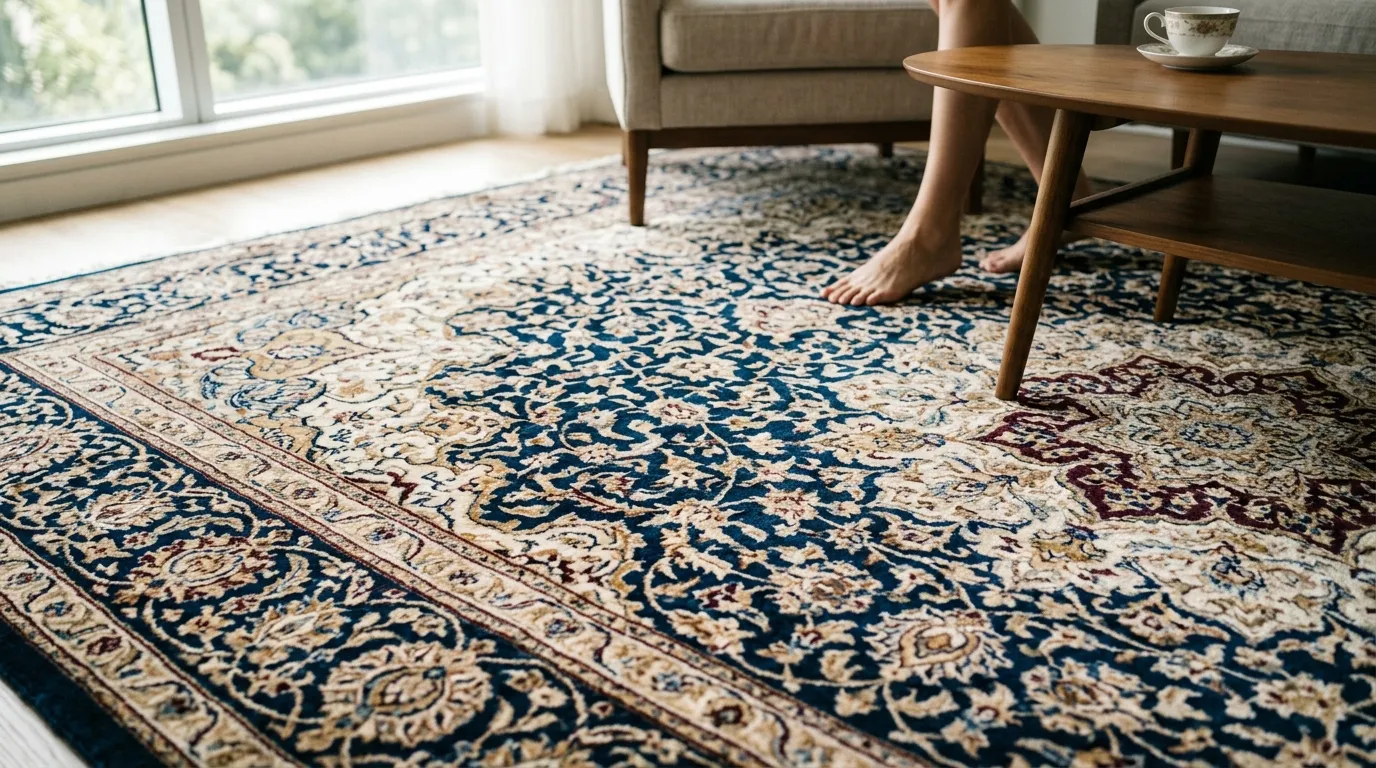
Complex designs with detailed patterns increase cost, especially in hand-made carpets. Fine floral motifs and curvilinear patterns require higher knot density and skilled weavers.
Simple geometric patterns are less expensive to produce and often more affordable. In machine-made carpets, design complexity affects price less than in hand-made ones.
Buyers should assess whether design complexity adds functional value or is purely decorative.
Brand and Seller Reputation
Established sellers often charge higher prices due to reputation, warranty, and after-sales service. While this can mean better reliability, it does not always guarantee better carpet quality.
Local shops and souks may offer similar carpets at lower prices but require careful inspection and negotiation.
Paying more for reputation makes sense only when it includes verified authenticity, service, and clear return policies.
How to Save Money When Buying Carpets in Sharjah?
Saving money does not mean choosing the cheapest carpet. It means choosing the right carpet for your needs at a fair price.
Buy from Local Carpet Markets
Local markets and carpet souks usually offer better pricing than malls and luxury showrooms. These sellers often have lower overhead costs and more flexibility in pricing.
Compare Prices at Multiple Shops
Comparing prices helps identify fair market value and reveals quality differences. Similar-looking carpets may vary widely in material and construction.
Choose Budget Materials Like Polypropylene
For high-traffic areas, polypropylene carpets offer good stain resistance and affordability. They are practical choices for families and rental properties.
Look for Seasonal Sales
Sales often occur during off-peak seasons, Ramadan, or end-of-year clearance periods. Timing purchases during these periods can result in significant savings.
Negotiate the Price
Negotiation is common in Sharjah carpet markets. Prices are often set higher to allow room for discussion. Polite negotiation can reduce costs without compromising quality.
Avoid Custom Designs
Custom sizes and patterns increase costs and limit resale options. Standard designs and sizes offer better value and flexibility.
Where to Buy Carpets in Sharjah?
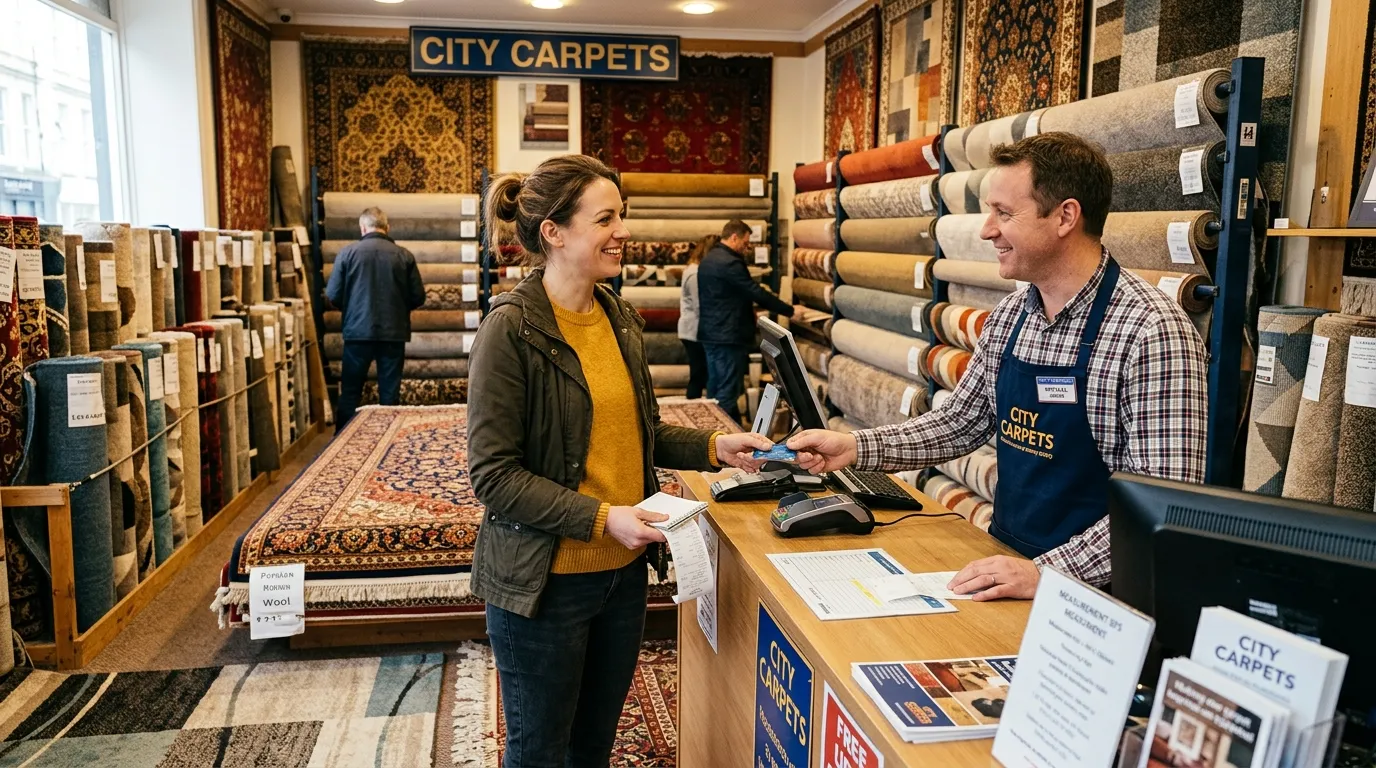
Sharjah offers multiple buying options, including traditional carpet souks, independent retailers, and large home furnishing stores. Souks provide variety and negotiation opportunities, while showrooms offer structured service and warranties.
Choosing where to buy depends on budget, experience level, and need for after-sales support.
Is Expensive Carpet Always Better?
Higher price does not always mean better suitability. An expensive silk carpet may be inappropriate for a busy household, while a moderately priced wool or synthetic carpet may perform better.
Value should be measured by how well the carpet fits the space, usage, and maintenance capability, not price alone.
Conclusion
Carpet prices in Sharjah are shaped by material, origin, size, weaving method, and seller practices. Understanding these factors allows buyers to make informed choices and avoid overpaying.
Saving money comes from matching the carpet to real needs rather than chasing labels or appearances. A well-chosen carpet offers comfort, durability, and value regardless of price bracket.
Also Read: How Long Do Quality Carpets Last in UAE Conditions?