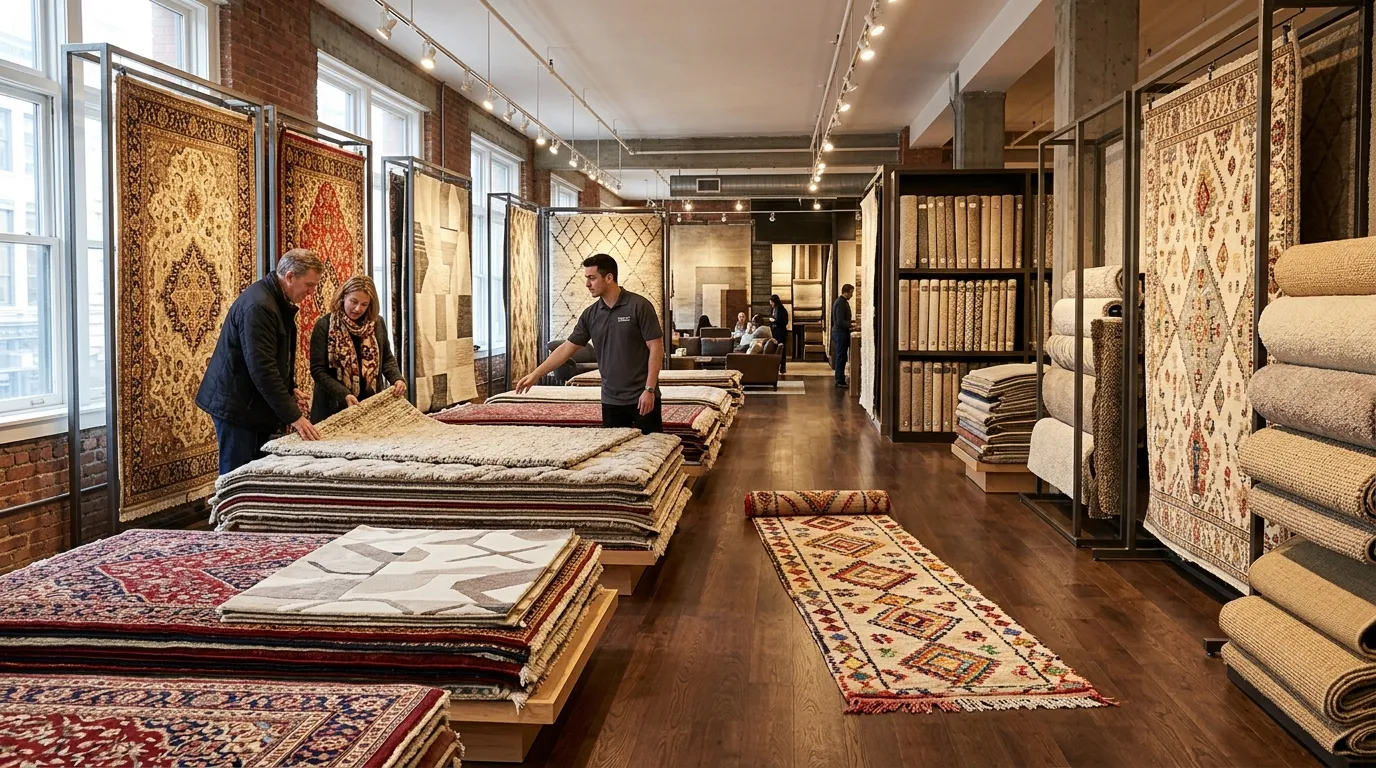

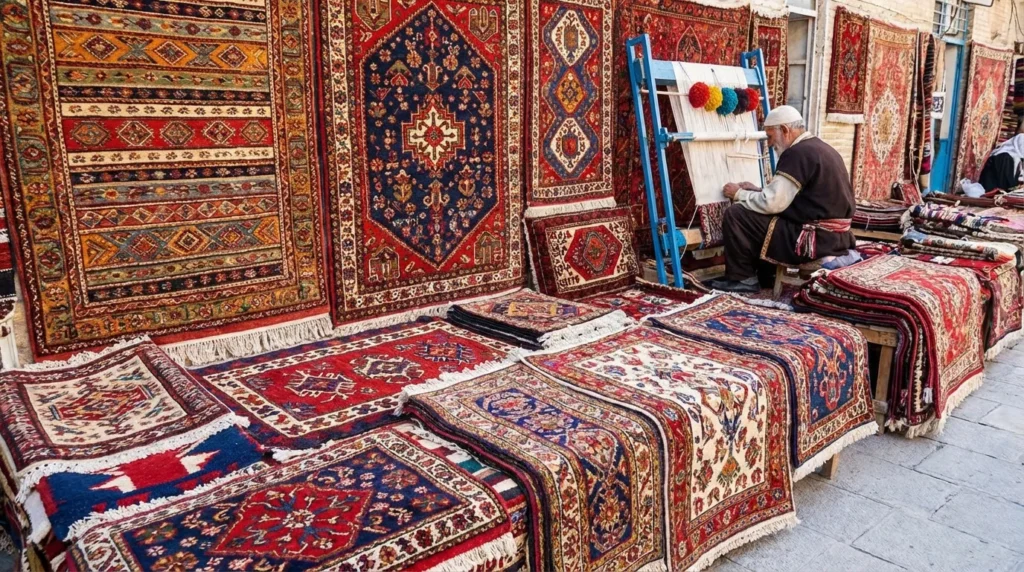
Buying a handmade carpet sounds simple, but many buyers end up with machine-made copies without even realizing it.
At first glance, both can look almost the same, especially if you are not familiar with the small details that matter. Sellers may label carpets as “handmade” to increase the price, even when they are not.
Here’s the thing, real handmade carpets have clear signs that show the time, skill, and effort behind them. From the knots on the back to slight design differences, every detail tells a story. Once you know what to check, it becomes much easier to spot the difference.
In this guide, you will learn simple and practical ways to identify fake handmade carpets so you can make a smart and confident purchase.
Check the Back of the Carpet
Turn the carpet over and inspect the reverse side in bright light.
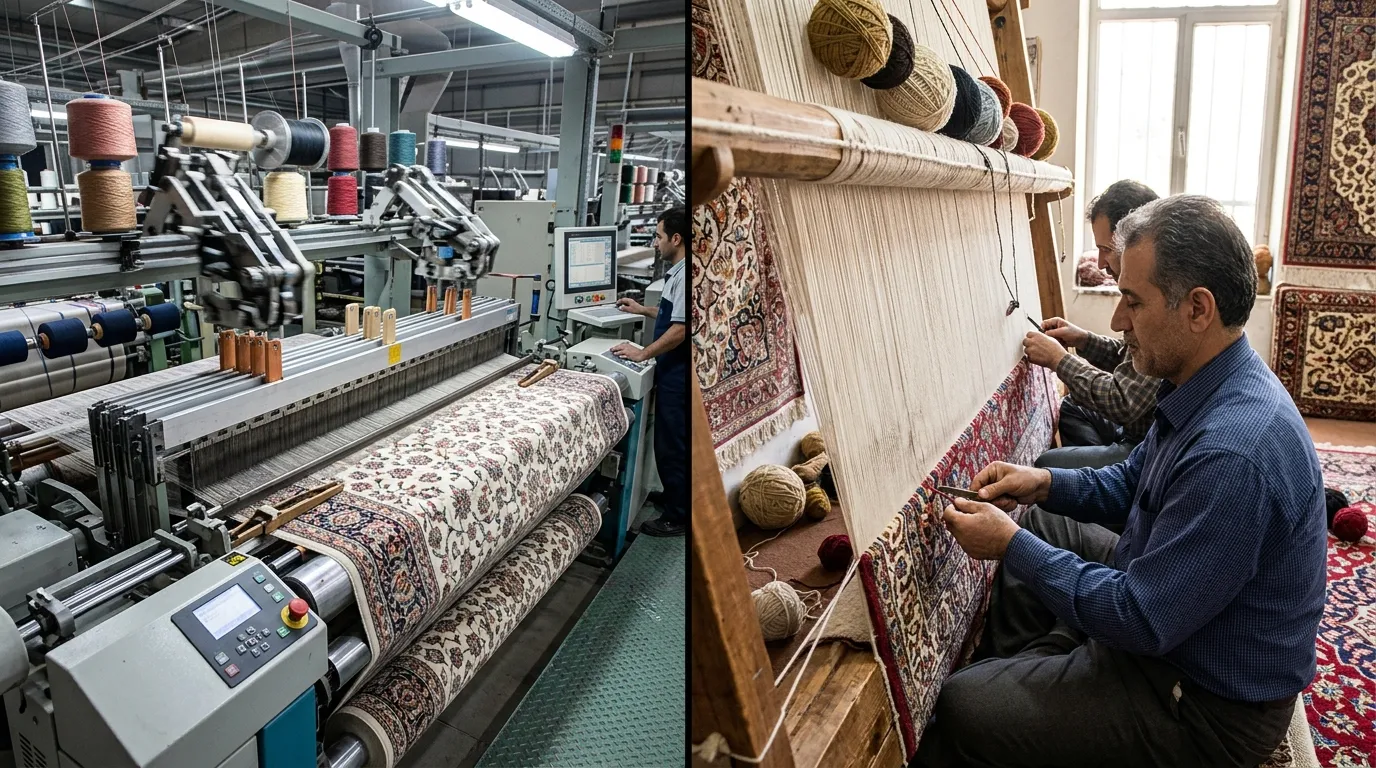
In a hand-knotted carpet, the back will show individual knots tied around vertical warp threads and locked in place by horizontal weft threads. The pattern on the back should clearly reflect the front design, though it may appear slightly less defined. Minor irregularities in alignment, spacing, and tension are normal because each knot is tied by hand.
There should be no fabric lining, mesh layer, rubber coating, or latex glue. If the back is covered with cloth or has a stiff adhesive surface, it is machine-made or hand-tufted, not hand-knotted.
Hand-tufted rugs often have a canvas backing glued to hold fibers in place. These are not fully handmade in the traditional woven sense and have significantly lower durability.
Look at the Knots
Knots define authenticity and quality.
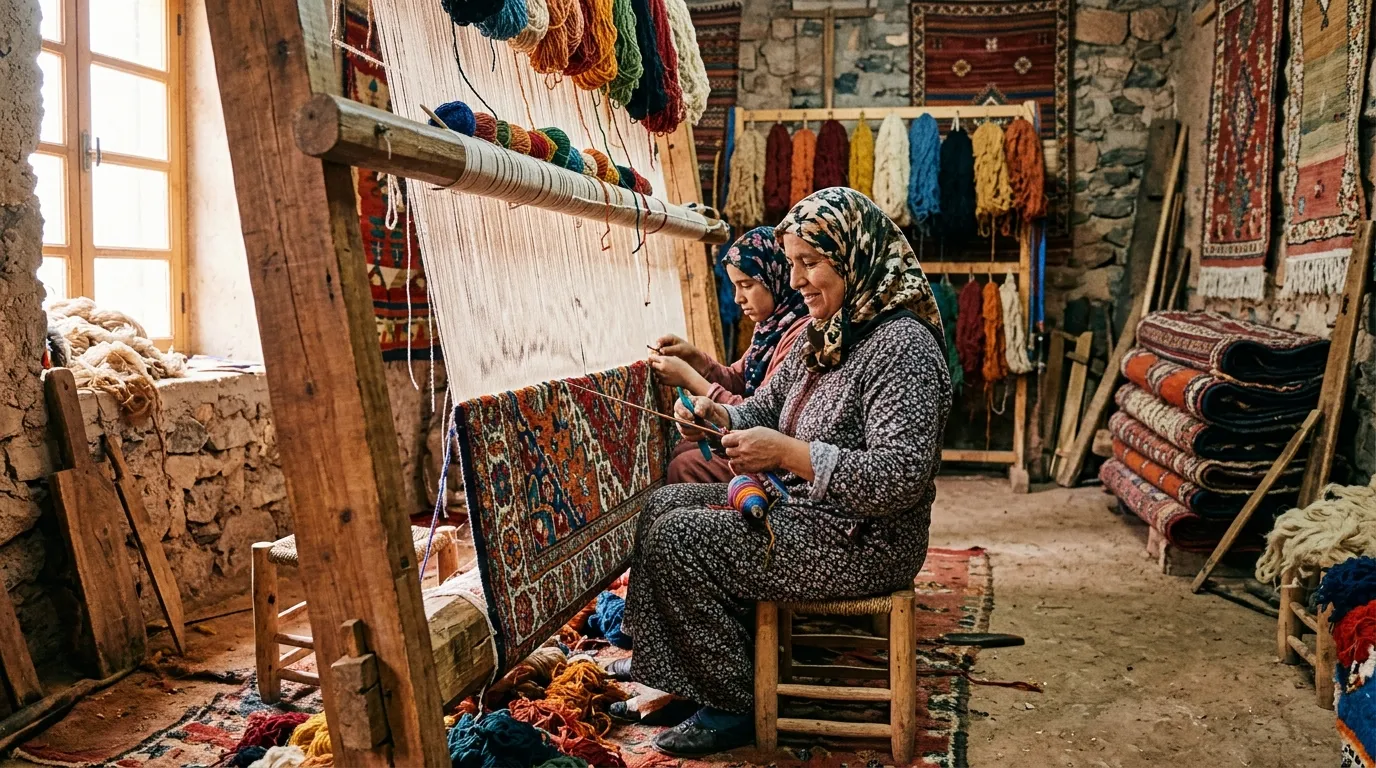
Handmade carpets use either symmetrical knots, often called Turkish or Ghiordes knots, or asymmetrical knots, often called Persian or Senneh knots. These knots are tied individually around warp threads. Slight variation in knot size and tightness is expected and indicates manual work.
Machine-made carpets simulate knots using loop stitching or injection tufting. The knots appear perfectly uniform and mechanically aligned. If you separate the pile gently and see fibers anchored into glue rather than wrapped around warp threads, the carpet is not hand-knotted.
Check knot density, measured as knots per square inch or per square meter. Higher knot density allows finer detail and greater durability. Authentic handmade carpets can range from approximately 80 to over 600 knots per square inch depending on origin and material. Machine-made carpets may claim density but lack true tied knots.
Check the Fringe
Fringe construction reveals whether the carpet foundation is authentic.
In a genuine handmade carpet, fringe is formed by the exposed ends of the warp threads. It is structurally integrated into the rug and cannot be removed without damaging the foundation.
In fake or machine-made carpets, fringe is often sewn or glued onto the edge after production. You may see stitching lines, adhesive residue, or uneven attachment. If the fringe can be lifted separately from the rug body, it is not part of the structural weave.
Also inspect edge binding. Handmade rugs usually have hand-wrapped or hand-stitched selvage edges. Slight variation in tightness or spacing is normal. Machine-made edges are uniformly overlocked with synthetic thread.
Inspect the Material
Fiber composition affects texture, durability, and authenticity.
Handmade carpets are traditionally made from wool, silk, or cotton. Wool should feel resilient, slightly oily due to natural lanolin, and warm when rubbed. It should compress under pressure and recover its shape.
Silk has a smooth, fine texture and a directional sheen that changes appearance when viewed from different angles. The shine should not look plastic or overly reflective.
Cotton is typically used for the foundation. It feels matte, strong, and firm. When visible on the back, it appears as tightly woven warp and weft threads.
Synthetic fibers such as polypropylene, polyester, acrylic, or nylon feel lighter and smoother. They often produce static electricity and may have a uniform shine. When examined closely, synthetic fibers look consistent in thickness and lack the subtle irregularity of natural fibers.
Natural dyes may produce slight tonal variation across a field of color. This variation, known as abrash, results from hand-dyeing in small batches. Machine-made carpets usually have perfectly uniform coloration due to chemical dye processing.
Notice Small Imperfections
Minor irregularities are expected in handmade carpets.
Because each knot is tied manually, there may be slight asymmetry in motifs, border thickness, or spacing. These variations are subtle and do not compromise structural integrity.
Perfect geometric repetition, exact symmetry, and identical motif spacing across the entire rug often indicate machine production. Absolute precision is a mechanical characteristic.
Inspect color transitions, pattern alignment, and corner detailing. Handmade rugs may show small adjustments where the weaver compensated for loom tension or pattern complexity.
Fold the Carpet
Flexibility reveals internal structure.
Fold the carpet lengthwise and then across its width. A handmade rug should bend smoothly without stiffness. It should not crack, resist folding, or reveal a rigid backing layer.
When unfolded, it should lie flat naturally. There should be no visible crease lines caused by internal adhesive layers.
Machine-made carpets with latex or rubber backing often feel stiff. Folding may expose cracking sounds or visible tension lines. Some may not bend easily due to synthetic reinforcement.
Check the Price
Pricing reflects labor, materials, and knot density.
Handmade carpets require weeks or months of weaving depending on size and complexity. High knot density, silk content, and natural dyes increase cost significantly.
If a large, highly detailed carpet is priced unusually low compared to market averages, it is likely machine-made. Silk carpets and high-density wool rugs command premium prices due to material cost and labor intensity.
Price alone does not confirm authenticity, but unrealistic pricing is a warning sign.
Ask for Origin Details
Authentic handmade carpets have traceable geographic origins and weaving traditions.
Ask for the country of origin, weaving region, knot type, fiber composition, knot density, and dye method. Different regions have recognizable structural characteristics.
For example, Persian rugs often use asymmetrical knots, while Turkish rugs commonly use symmetrical knots. Regional weaving styles influence motif design, color palette, and border structure.
Request documentation if available, but do not rely solely on certificates. Physical inspection should always confirm claims.
Knowledgeable sellers should provide consistent and detailed answers regarding weaving technique, production time, and material sourcing.
Conclusion
Identifying a fake handmade carpet requires systematic inspection of construction, knots, fringe integration, fiber type, dye variation, flexibility, and pricing logic.
Examine the back for visible hand-tied knots without adhesive backing. Confirm that fringe is part of the warp foundation. Inspect materials for natural fiber characteristics and look for subtle irregularities that indicate manual craftsmanship.
Evaluate flexibility, verify realistic pricing, and request detailed origin information. When all structural and material indicators align, you can confidently determine whether a carpet is genuinely handmade or machine-produced.
Also Read: Best Carpet Cleaning Methods for Wool, Silk & Synthetic Carpets