
The most effective carpet maintenance strategy for dust and sand in Sharjah is a structured system that combines high-frequency vacuuming, controlled entry points, indoor air management, fiber protection, and professional deep cleaning every 3 to 6 months.
Sharjah’s desert climate produces extremely fine, silica-based sand particles that are sharp and abrasive. These particles do not remain on the surface of carpets. They settle deep into the pile and migrate toward the backing layer. With daily foot traffic, the particles grind against fibers, causing fraying, loss of density, color dulling, and premature wear.
Routine cleaning is not optional in this environment. It is a technical requirement for preserving carpet lifespan. The following sections explain exactly what to do and why it works.
Vacuum More Often Than You Think
In Sharjah, weekly vacuuming is insufficient. Fine sand enters homes daily through footwear, clothing, open doors, ventilation gaps, and air circulation systems.
High traffic areas such as living rooms, corridors, and entry paths should be vacuumed four to five times per week. Medium traffic areas require two to three vacuum sessions weekly. Low traffic bedrooms should still be vacuumed at least once per week.
Use a vacuum with strong suction power, ideally a minimum of 200 to 300 air watts. Machines equipped with HEPA filtration are strongly recommended because desert dust includes fine particulate matter smaller than 0.3 microns. Without HEPA filtration, these particles recirculate into the air and resettle.
Vacuum slowly. Move the machine in overlapping passes. One fast pass only removes surface debris. Slow movement allows suction to extract sand lodged near the base of the pile.
For cut pile carpets, a motorized brush roll helps agitate and lift embedded grit. For loop pile carpets, disable aggressive brush rotation to prevent fiber snagging and distortion. Adjust the vacuum height so the head makes proper contact without excessive resistance.
Consistent high frequency vacuuming prevents compaction, which becomes difficult to reverse once particles settle into the backing.
Use Entry Mats at Every Door
Most sand enters through shoes. Controlling entry points significantly reduces internal contamination.
Install a two-stage mat system at every exterior door. The outdoor mat should be coarse and textured to scrape off larger debris. Materials such as rubber-backed coir or heavy duty polypropylene are effective.
The indoor mat should be tightly woven and absorbent to capture fine dust particles. It should be large enough to allow at least two full steps before reaching carpeted areas. Short decorative mats are ineffective because they do not provide sufficient contact time.
Mats must be shaken or vacuumed daily. Fabric mats should be washed weekly. When mats become saturated with dust, they stop functioning as filtration barriers and instead become secondary dust sources.
This simple control method can reduce internal sand transfer by a substantial margin.
Create Shoes-Off Habit
A strict shoes-off policy reduces sand infiltration and fiber abrasion.
Outdoor footwear carries sand, asphalt residue, oils, and contaminants. Hard soles and high heels increase fiber crushing pressure, particularly in wool and dense synthetic carpets.
Place a designated shoe storage rack or cabinet near the entrance. Closed storage reduces secondary dust spread. Indoor slippers can be provided for comfort without introducing abrasive particles.
Enforcing this habit consistently prevents long term structural damage to carpet fibers.
Spot Clean Spills Right Away
Moisture combined with fine sand forms compacted grime that bonds tightly to fibers and backing.
When a spill occurs, blot immediately using a clean white cotton or microfiber cloth. Do not rub. Rubbing forces sand deeper into the pile and spreads staining agents.
Use a pH neutral carpet cleaning solution with a pH range between 6 and 8. Avoid highly alkaline household detergents because residue attracts more dust and accelerates re-soiling. Avoid bleach or harsh oxidizers, as they weaken fibers and cause discoloration.
Apply minimal moisture. Over-wetting can penetrate the backing and underlay, increasing the risk of mold growth and adhesive breakdown. After treatment, blot thoroughly and allow complete drying before foot traffic resumes.
Prompt response prevents permanent staining and hardened debris buildup.
Use Carpet Protectors in Busy Areas
High traffic zones experience concentrated abrasion and fiber compression.
Place runners or protective rugs in hallways, entry paths, and under frequently used seating areas. For office chairs, use a transparent chair mat to prevent rolling pressure from flattening fibers.
Rotate runners every few weeks to distribute wear evenly. Without rotation, visible traffic lanes form where fibers become permanently crushed and discolored.
Protective layering reduces direct friction and extends the usable life of the carpet.
Shake and Sun Small Rugs Weekly
Small rugs accumulate dust rapidly, especially near balconies, doors, and kitchens.
Shake small rugs outdoors weekly to dislodge embedded sand. Vacuuming alone may not remove deeply settled particles.
Sun exposure for several hours helps eliminate residual moisture and reduce microbial growth. Avoid prolonged exposure for natural fiber or dyed rugs, as ultraviolet light can cause fading.
Regular shaking prevents grit from accumulating at the base of smaller rugs and transferring onto larger carpeted areas.
Deep Clean Every 3 to 6 Months
Surface cleaning does not remove all embedded debris. In Sharjah’s environment, professional deep cleaning every three to six months is necessary.
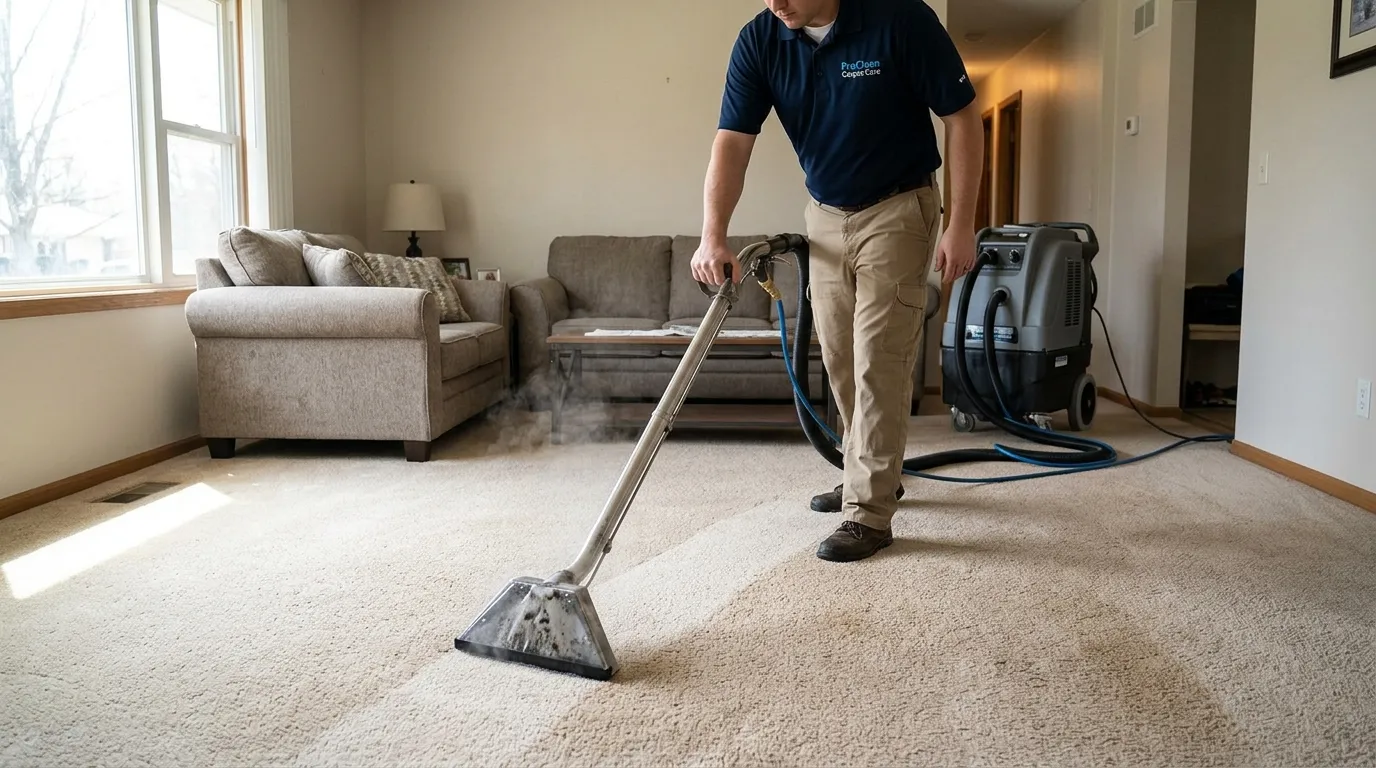
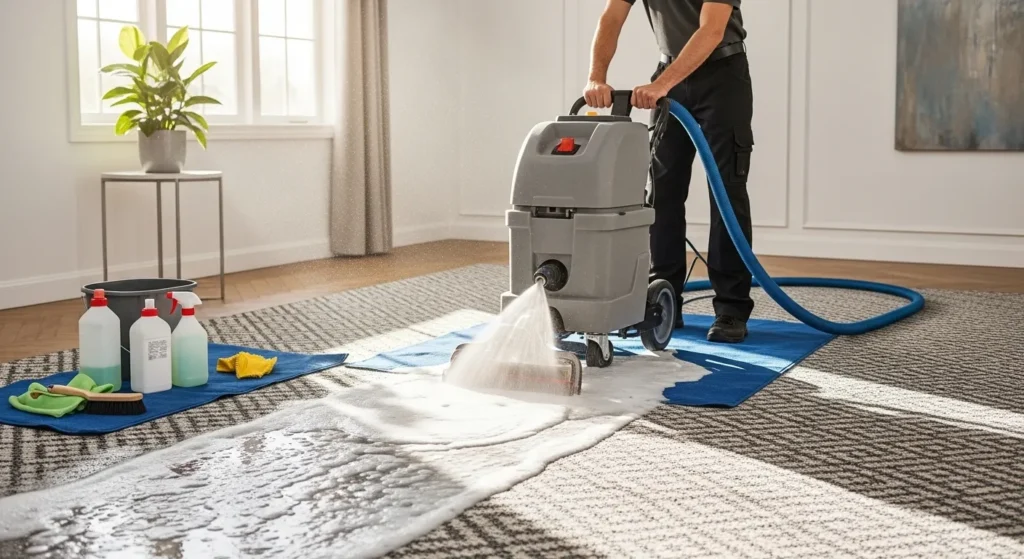
Hot water extraction, commonly referred to as steam cleaning, is the most effective method. It flushes water and cleaning solution through the pile and extracts suspended particles from deep within the carpet structure.
Ensure that extraction is thorough to prevent moisture retention. Carpets should dry within 6 to 12 hours under proper ventilation. Extended dampness increases the risk of odor development and microbial growth.
For wool carpets, use wool safe, pH balanced solutions. For synthetic carpets, slightly stronger solutions may be tolerated but should still be residue free.
Delaying deep cleaning shortens carpet lifespan due to continuous abrasive wear.
Groom Carpets With a Brush Occasionally
Carpet grooming restores pile alignment and improves appearance.
Use a carpet rake or soft bristle brush to lift flattened fibers in high traffic areas. Brush in the direction of the pile to avoid fiber stress.
Grooming redistributes fibers, improves light reflection for a more uniform appearance, and enhances the effectiveness of vacuuming by loosening trapped particles.
Occasional grooming maintains texture and prevents matting between deep cleaning sessions.
Close Windows During Dusty Days
Sharjah experiences periodic high wind and dust movement. Even when dust is not visibly dramatic, airborne particulate levels increase significantly during windy conditions.
Keep windows closed during dusty days to prevent fine particles from settling directly into carpet fibers. Ventilate during calmer periods only.
Airborne dust continuously settles on horizontal and textile surfaces. Reducing indoor exposure decreases cleaning frequency and fiber abrasion.
Change AC Filters Regularly
Air conditioning systems circulate air continuously. Dirty filters fail to trap fine particles and redistribute dust throughout the interior.
Replace or clean AC filters every one to three months depending on usage and manufacturer specifications. High efficiency filters capture smaller particulate matter and reduce airborne dust that eventually settles into carpets.
Inspect air ducts periodically if dust buildup becomes visible around vents. Clean filters improve indoor air quality and reduce carpet contamination.
Conclusion
Maintaining carpets in Sharjah requires structured, high frequency care. Fine desert sand is abrasive, persistent, and capable of damaging fibers at the microscopic level.
Frequent vacuuming, entry control, shoes-off habits, immediate spill response, protective layering, regular rug maintenance, controlled airflow, AC filter management, and professional deep cleaning together form a complete preservation system.
When implemented consistently, these measures maintain fiber density, prevent premature wear, preserve color clarity, and significantly extend carpet lifespan in desert conditions.
Also Read: How to Clean Carpets at Home Without Damaging Them?