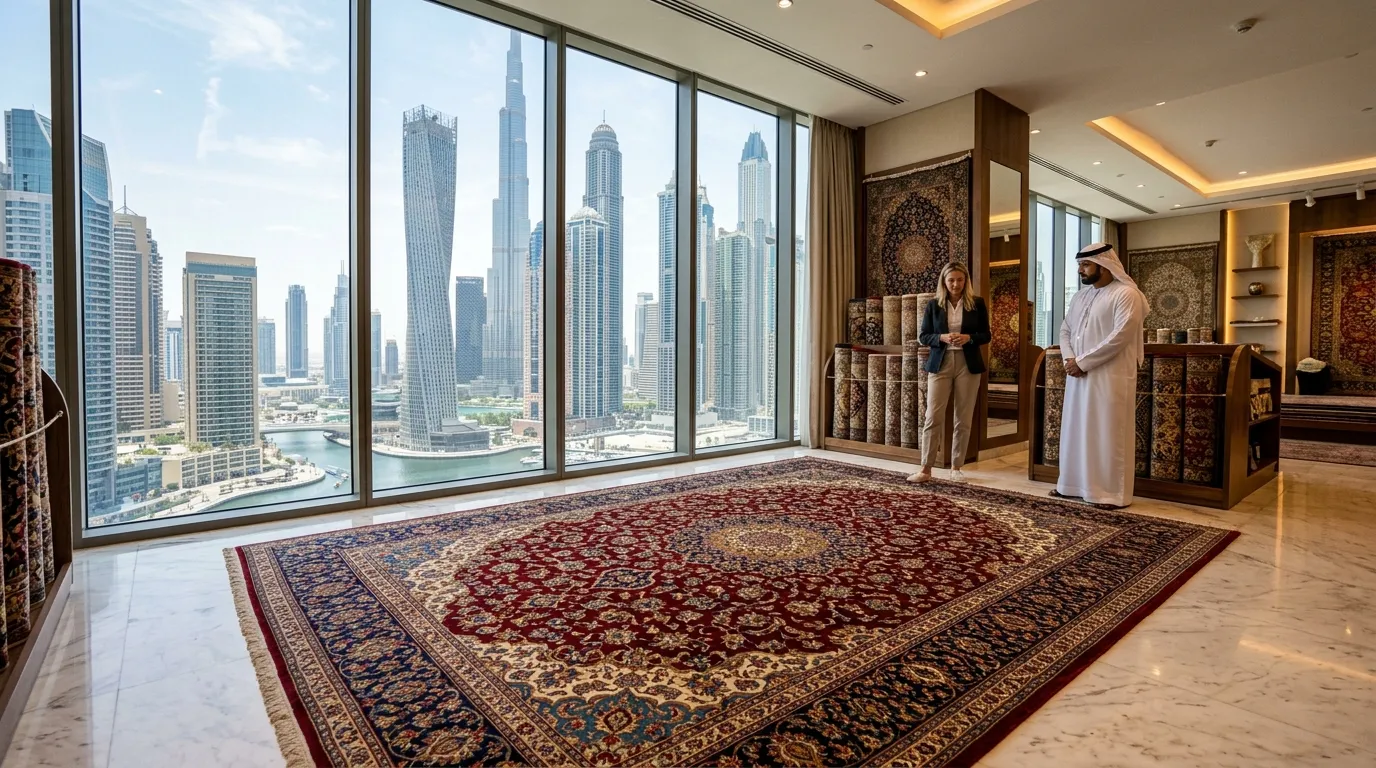

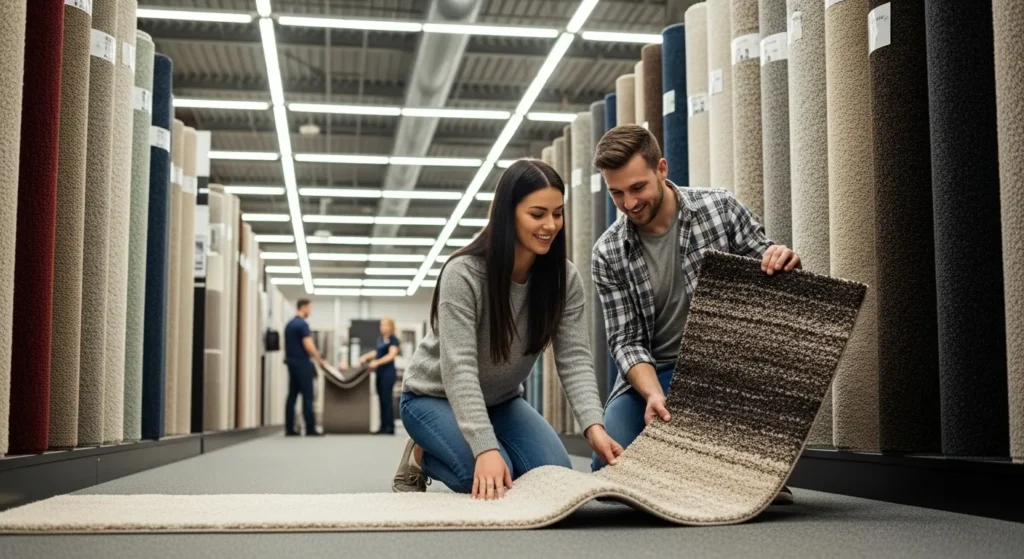
Most carpet buying mistakes happen because buyers focus on appearance instead of construction quality, material performance, size accuracy, and long-term suitability for their home and lifestyle.
A carpet is not just a decorative item. It is a functional surface that must handle foot traffic, dust, humidity, sunlight, and cleaning.
Avoiding the mistakes we’ve listed below helps ensure the carpet you buy lasts longer, performs better, and delivers real value for money.
Focusing Only on Design
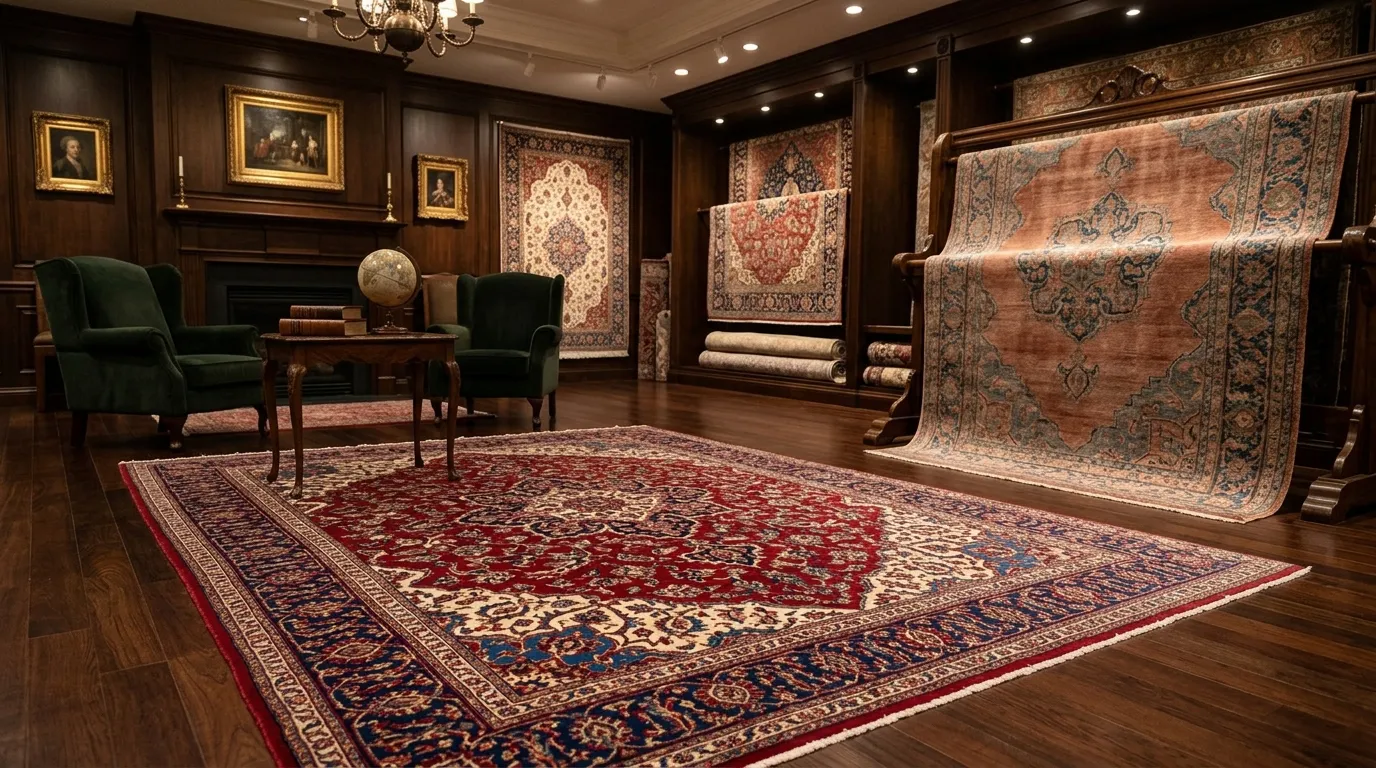
Choosing a carpet purely based on design is one of the most common and costly mistakes. A carpet can look impressive in a showroom but perform poorly once placed in a real home environment.
Design should never be evaluated in isolation. Pattern clarity depends on knot density, dye quality, and fiber type. Highly detailed designs on low-density carpets lose definition quickly. Bright colors made with poor dyes fade unevenly, especially in rooms with natural sunlight.
A good buying decision balances visual appeal with technical construction. The design should complement the space, but structure determines how long that design will last.
Wrong Carpet Size
Incorrect sizing is another frequent issue. A carpet that is too small makes a room feel disconnected, while an oversized carpet disrupts furniture placement and circulation.
Many buyers estimate size instead of measuring properly. This results in carpets that sit awkwardly under furniture or fail to anchor seating arrangements. In living rooms, at least the front legs of sofas and chairs should rest on the carpet. In dining rooms, the carpet must extend far enough so chairs remain on it even when pulled out.
Accurate measurements and layout planning prevent unnecessary replacement costs later.
Hand-Made vs Machine-Made Confusion
Many buyers assume that a thick or expensive-looking carpet is hand-made, which is often incorrect. Machine-made carpets can closely imitate hand-knotted designs, especially under showroom lighting.
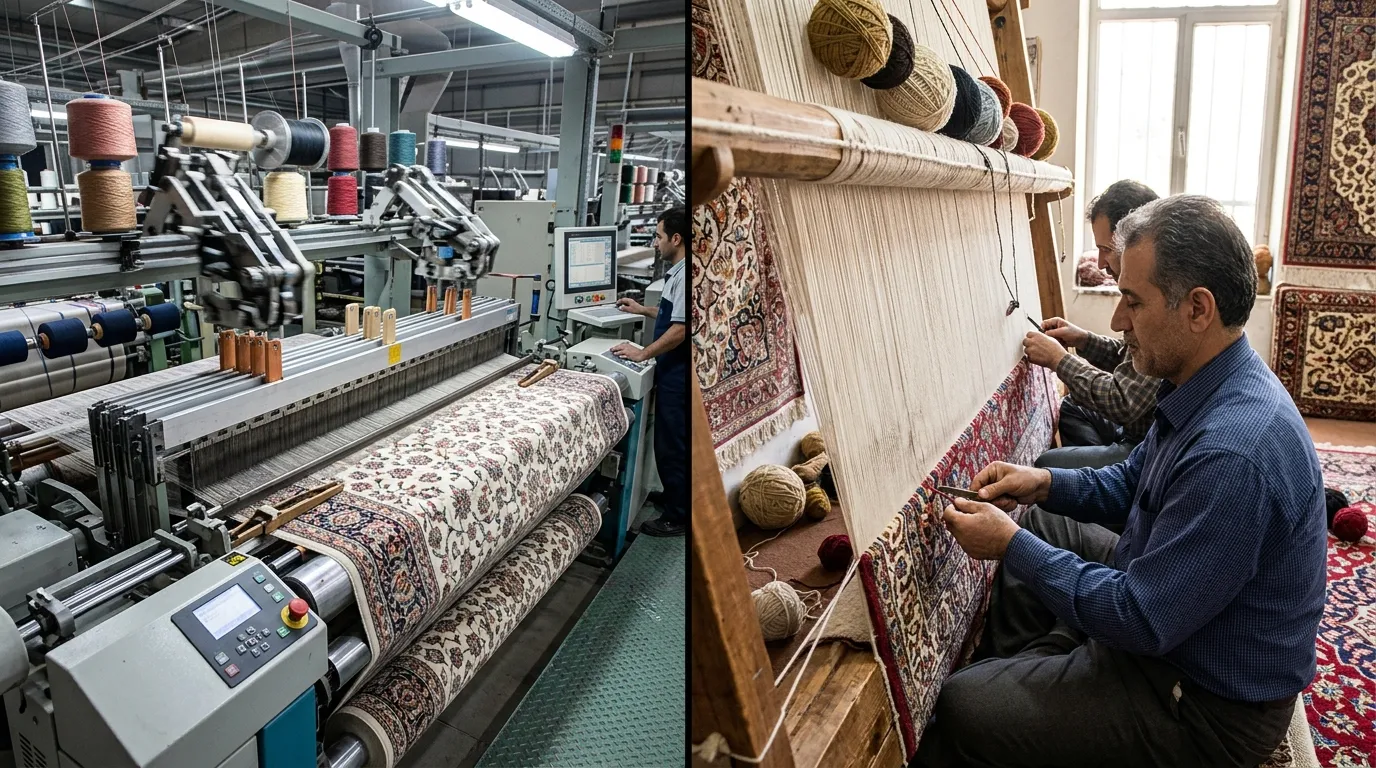
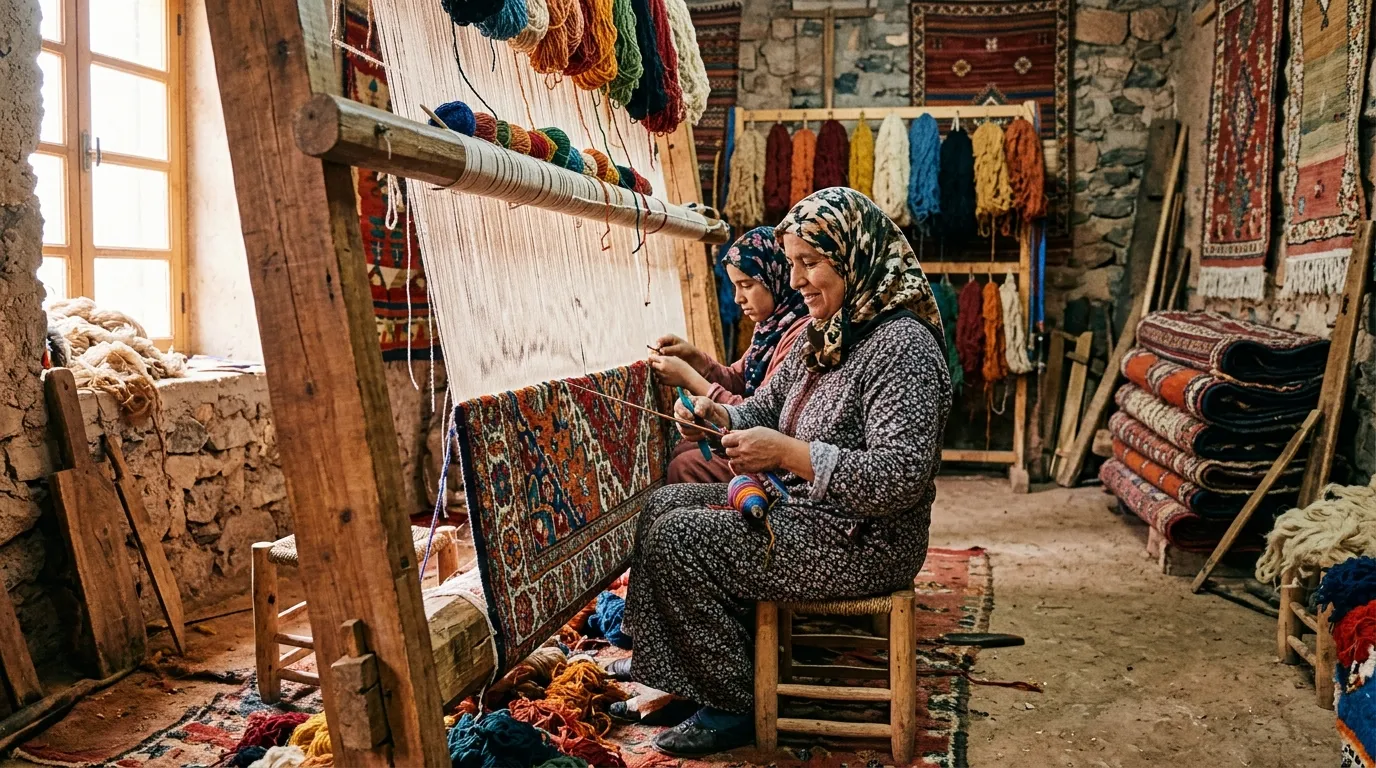
Hand-made carpets are knotted or woven manually, resulting in slight irregularities, stronger structure, and longer lifespan. Machine-made carpets are uniform, mass-produced, and generally less durable.
Confusion between the two leads to overpaying for machine-made carpets or undervaluing genuine hand-made pieces. Always inspect the back of the carpet and ask about knotting method and production process.
Also Read: Hand-Made vs Machine-Made Carpets in Sharjah: Which Is Better?
Mistaking Silk-Look for Silk
Silk-look carpets are frequently mistaken for real silk, particularly in markets where viscose or bamboo silk carpets are common. These materials mimic shine but lack silk’s strength and resilience.
Real silk is smooth yet strong, with a natural luster that shifts with light angle. Artificial silk fibers are more fragile, prone to crushing, and difficult to clean. They also absorb moisture differently, increasing the risk of permanent damage.
Paying silk prices for non-silk carpets is a costly error. Always verify fiber type and do not rely on appearance alone.
Ignoring Knot Quality
Knot quality is one of the most important indicators of durability, yet many buyers never check it. A carpet with loose or inconsistent knots wears out quickly and loses shape.
Hand-knotted carpets should show even knot spacing on the back. Machine-made carpets should have tight, consistent backing without excessive glue. Low knot density results in faster pile loss and pattern distortion.
Inspecting the back of the carpet reveals more about quality than the surface design.
Light Colors in Busy Areas
Light-colored carpets are often chosen for their elegant appearance, but they are impractical for high-traffic areas. In Sharjah homes, dust and sand are common, and light colors show dirt, stains, and wear much faster.
Even with frequent cleaning, light carpets in busy areas lose their original look quickly. They are better suited for bedrooms or formal rooms with limited use.
Choosing darker tones or patterned designs for living areas improves longevity and reduces maintenance stress.
Skipping Origin Details
Failing to ask where a carpet is made is a major mistake. Origin affects weaving technique, material quality, dye stability, and resale value.
Iranian, Turkish, Afghan, and Pakistani carpets follow different construction traditions. Machine-made carpets may carry vague or misleading origin labels.
Knowing the origin helps set realistic expectations about lifespan, care requirements, and fair pricing.
No Price Comparison
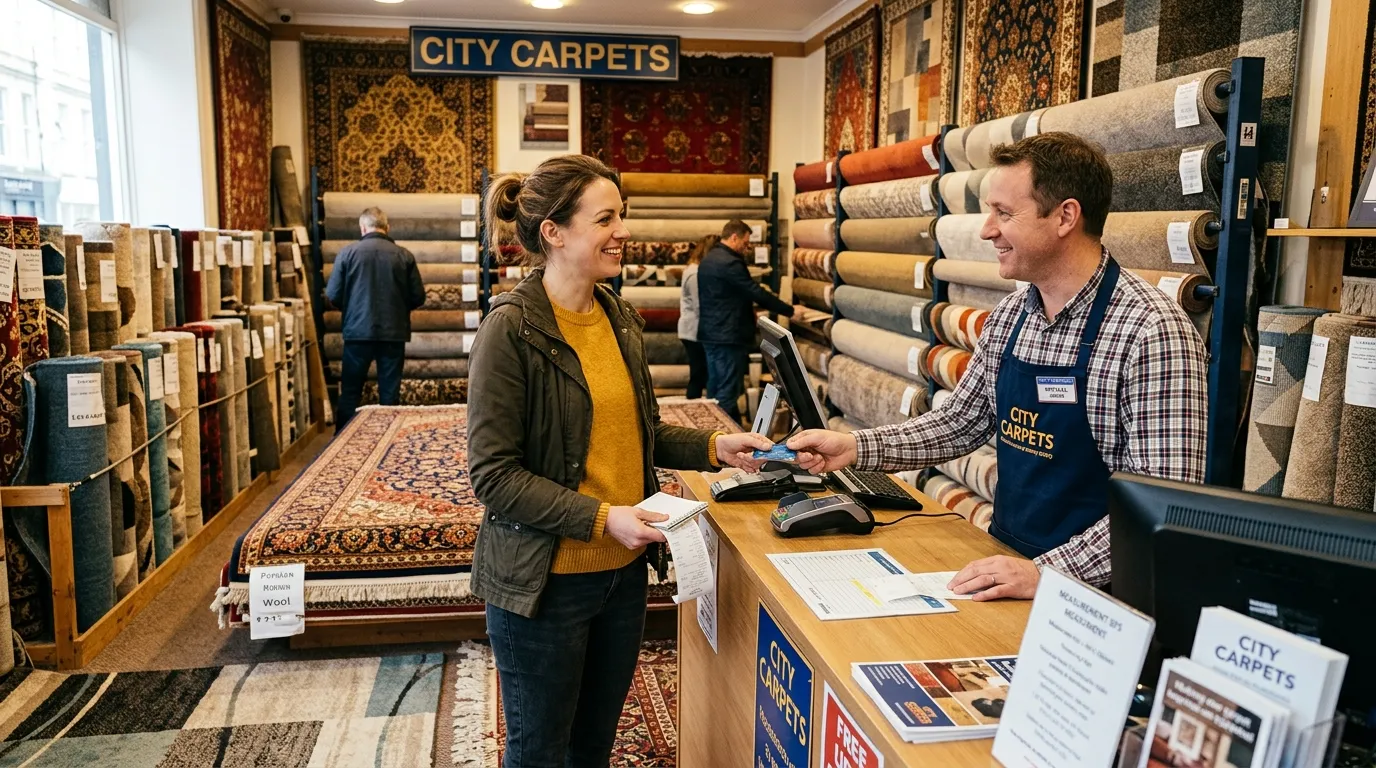
Not comparing prices across multiple shops often leads to overpaying. Carpet pricing varies widely depending on seller overhead, location, and negotiation practices.
Two carpets that look similar may differ significantly in material and construction. Comparing prices helps identify real value and exposes quality differences.
In Sharjah markets, negotiation is common, and initial prices are rarely final.
Ignoring Care Needs
Every carpet has specific care requirements based on its fiber and construction. Ignoring these needs leads to premature wear and damage.
Wool carpets require periodic professional cleaning and controlled moisture exposure. Silk carpets need extremely careful handling. Synthetic carpets tolerate frequent cleaning but may lose appearance faster.
Understanding care requirements before buying prevents costly mistakes and extends carpet life.
No Return Check
Many buyers do not check return or exchange policies, assuming carpets cannot be returned. This becomes a problem when the carpet does not fit the space, looks different under home lighting, or feels uncomfortable.
Reputable sellers often offer limited exchange options for unused carpets. Not confirming this removes flexibility and increases risk.
Clear return policies are a sign of seller transparency and confidence.
Conclusion
Most carpet buying mistakes result from prioritizing appearance over structure, material, and practicality. A carpet should suit the room, withstand daily use, and align with maintenance capabilities.
Avoiding these common errors requires asking the right questions, inspecting technical details, and making decisions based on long-term performance rather than short-term appeal. A well-chosen carpet enhances a home. A poorly chosen one becomes an expensive regret.
Also Read: Turkish vs Iranian Carpets: Which Is More Popular in Sharjah?